Skip to content

QBCC 1199847/Family owned, made in Cairns

(07) 4057 5443/0456 622 443

Cairns, QLD

Security Doors in Trinity Beach

Made to measure security screens and doors for a suburb that runs from flat beach streets up to the slopes below a 218 metre hill.

Trinity Beach recorded 6,594 residents at the 2021 Census, and Cairns Regional Council lists it among the beaches where it provides lifeguard services. Two official Queensland place names sit inside the locality boundary, Earl Hill and Taylor Point, and the hill stands in a conservation park ringed by housing rather than by open bush. Queensland's cyclone guidance ties a home's classification to nearness to open water or open country, whether the site is on a hill, and whether other buildings shield it, and all three of those change within a few streets here. Cairns Security Doors makes security doors and window screens to measure, and repairs existing ones on site. Ask us for a measure.

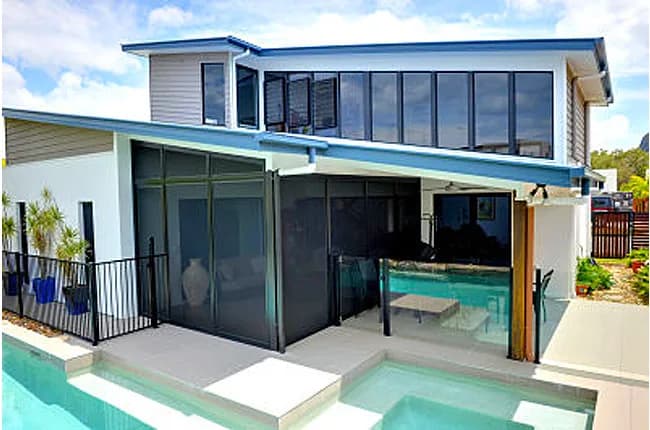
Two storey modern home with security screens enclosing the poolside patio

Most quotes for a security screen start with the mesh. On this suburb that is the second question. Trinity Beach has a recorded hill and a recorded coastal point inside its own boundary, and the Earl Hill summit at 218 metres is surrounded by housing rather than by bush. So the locality runs from sheltered flat streets to open slopes with a clear outlook, and Queensland's own plain rule of thumb is that the better the view, the higher the wind classification. The homes whose owners most want a screen that does not spoil the outlook are often the homes at the exposed end of that scale. The first question is which end you are on.

Why security doors matters in Trinity Beach

Queensland's cyclone guidance is specific about what sets an individual home apart, and it is not the postcode. It classifies coastal areas north of Bundaberg into a single wind region, and Cairns sits on the Queensland coast north of Bundaberg. Inside that region a home takes a site wind classification of C1 to C4 depending on local features at the site: nearness to large bodies of water or open country, whether or not the site is on a hill, and whether it is surrounded by other buildings. Homes on hillsides or on open terrain must be built for a higher classification than homes on flatter land surrounded by other buildings. All three of those factors are present and variable inside the Trinity Beach boundary: open sea on the eastern side, and a recorded hill and a recorded coastal point within the locality itself. A street below the slope and a street on it are not describing the same site.

The guidance also offers a plain rule of thumb for placing yourself on that scale: the classification is related to the view from the home, and the better the view, the higher the classification. No view sits at the lowest band, a view out over the streets or the sea well above it, and a home on a hilltop or on rising land near the coast at the highest. Put that beside the objection this business answers first in its own product copy, that a screen means looking at ugly grills and bars that spoil the view, and the two land on the same house.

The gap between the bands is not small. The state publishes a design site wind speed for each: 180 kilometres per hour at the least exposed against 310 at the most exposed, both describing the same 250 kilometre per hour event the Bureau of Meteorology classifies as a mid category four. The building code treats wind action on a house as something calculated for the site rather than assumed from the region. Two openings of the same size in one suburb can sit in materially different load.

The work that follows is narrow and practical. Everything is made to measure locally rather than supplied in stock sizes, and the openings get measured at the property. What this business does not do is put your home in a band: the guidance is explicit that the wind classification is determined by a trained building professional such as an engineer, builder or building certifier. If one has already told you something about your site, bring it to the measure.

Two quotes, same mesh, and neither of them mentions what the screen is bolted to

Mesh is the visible part, so it is the part that gets compared. The state's building guidance describes wind resistance as a continuous chain instead: pressure on the inside and outside of a home creates forces that must be transferred by structural members and connections all the way to the ground. In the failures that guidance illustrates, the sheeting, the battens, the trusses and the walls were not themselves the problem. How each was fixed to the next was. Read across to a screen and the corrosion question lands on the connection before it lands on the panel. The same guidance advises homes close to seawater to use components and connections with higher levels of corrosion resistance, states plainly that near saltwater the fasteners and connectors should be of a higher corrosion resistance than normal, and documents roof loss caused by screws that corroded and stopped holding. Corrosivity is a graded property of a place, described in bands running from very low up to an extreme category with a separate marine band near the top. Humidity keeps salt working on a surface: at the Bureau of Meteorology's Cairns Aero station the mean 9am relative humidity is 72 percent across the year and 78 percent from February to April. The settled part is what the screen itself is made of: 316 marine grade stainless mesh in T6 grade high tensile aluminium frames, and perforated aluminium the manufacturer states is corrosion resistant. Beyond the panel, Australia treats the installation of security screens as its own discipline with its own Australian Standard, separate from the product performance one. Where the guidance puts the documented failures at the connections rather than at the components, the reveal, the frame behind the opening and the wall it sits in are part of what a measure has to take in, not just the size of the hole. That is a fair question to put to anyone quoting on the opening, this business included.
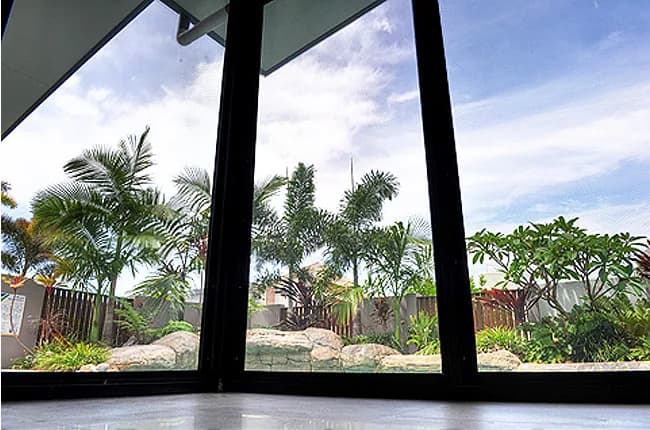
View from inside a home through black-framed security screens to a tropical garden with palms and a rock-edged pool

Assuming a security screen is storm protection, or that a screen maker can tell you your site's wind classification

Both assumptions are reasonable and both are wrong. Any page that discusses wind exposure invites the first, and the tradesman standing at your openings with a tape looks like the person who would know the answer to the second. The state guidance separates the categories itself: debris screens are different from sun screens and security screens, effective debris screens are rated by testing that indicates their resistance to impact from debris, and a permanently fixed debris screen may double as a security screen. The debris performance comes from that rating, earned in a test. On the classification, the guidance is equally clear that it is determined by a trained building professional such as an engineer, builder or building certifier, and is then used by designers and construction trades to select components. We make and fit security screens, and we would rather say that plainly than let a wind conversation imply more. No range here is offered as a debris screen or a cyclone screen, and no debris, storm or wind rating is claimed for any of them. If you need a classification for your site, it comes from an engineer, builder or building certifier. If you want debris protection for glazing, ask for a product that holds a debris rating from testing, because that is a different category from what we make.

Four ranges, and the one that suits the front door is rarely the one that suits the west facing window

Trinity Beach is 68.5 percent separate houses, 17.8 percent flats or apartments and 13.0 percent semi-detached or townhouses, with a median age of 42. That is a mixed set of openings on one street, and inside a single house a front entry, a bedroom window and a patio opening are three different problems. Specifying one product across a whole house usually means overpaying on the openings that did not need it, or underspecifying the one that did. The ranges are genuinely different things. SCREENGUARD is 316 marine grade stainless steel mesh in T6 grade high tensile extruded aluminium frames, manufactured and finished in Queensland, and the manufacturer describes it as designed to protect the view. PERFGUARD is a 2 mm powder coated black perforated aluminium mesh stated at about 40 percent view through, which also does privacy and sun screening. Diamond Grille is the cost effective line, and Colonial Casting is the decorative one, used on a front door or to enclose a patio. Choosing one range for the whole house is the shortcut; going opening by opening is the work. The manufacturers' terms differ across the ranges as well, and the conditions travel with them. SCREENGUARD carries a stated full 10 year manufacturer's warranty, and the regular maintenance with SCREENGUARD Powawash that keeps it valid is part of the 10 year figure rather than a footnote beneath it. PERFGUARD's stated term is a 7 year warranty on the product, counted from the day it is installed, and conditions apply to that one too. Both are the manufacturer's terms on the product, not a promise about the work.

A price quoted off a photo and a phone call

It is quick, and on a flat inland street with a standard opening it is often close enough. The three things the state guidance names as setting one site apart from another, open water or open country nearby, a hill, and shielding from other buildings, are exactly the three things a photo of a doorway does not show. The size of the hole is the easy part. What the screen is fixed into, and how sound the chain behind it is, decides whether the job holds up, and that is where the guidance says the documented failures actually turned. Everything is made to measure rather than supplied in stock sizes, and the measure and the fit both happen at the property. Being at the opening is what makes those three factors observable rather than assumed, and a measure that is going to hold up has to take in what the opening is set into, not only how wide it is. Bring anything a builder, engineer or building certifier has already put in writing about the site: the guidance is explicit that the classification comes from that professional, and nothing done at a measure substitutes for it.

The mesh still looks fine and the door has stopped working

Trinity Beach holds 3,107 private dwellings, and in a stock that size hardware wears at a different rate from mesh. The symptoms customers report are specific: a door not locking or closing properly, a broken handle, a jamming key, and sliding doors that roll incorrectly, jam, bounce, will not close or jump off the track. None of those need a new door. Left alone they get worse, and a slider that has jumped its track is a security problem as well as an irritating one. For a renter, or the owner of a unit or townhouse, replacing a whole opening may not even be their decision to make. Hardware wears out while the panel is still doing its job, so a fault in the moving parts is repair work rather than a reason to replace the opening. That work is done at the property, on the screen already there, and it is the sensible first call while the screen itself is sound. If the panel has gone as well, that shows up at the same visit.

SCREENGUARD 316 Stainless Steel Mesh Screens

316 marine grade stainless steel mesh in T6 grade high tensile extruded aluminium frames, manufactured and finished in Queensland in a variety of colours, tested for dynamic impact, knife shear, anti-jemmy, pull and probe. The homes here with the outlook this mesh is described as designed to protect are, by Queensland's own rule of thumb, the homes at the higher end of the wind classification scale. Keeping the view and taking the exposure seriously are the same conversation on this suburb rather than competing ones.

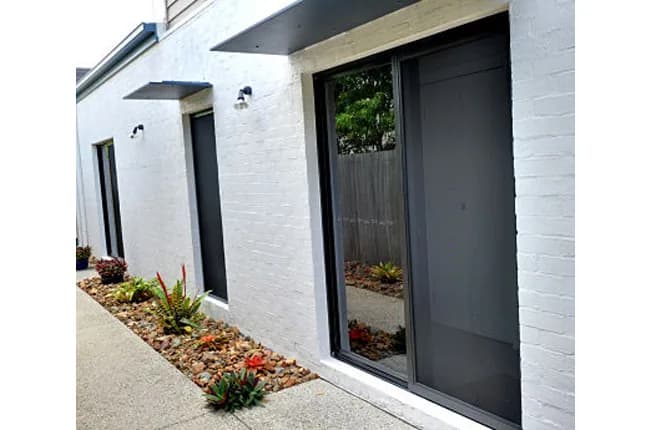
Dark security screens on the sliding door and windows of a white painted brick home with a tropical garden bed

PERFGUARD Perforated Aluminium Screens

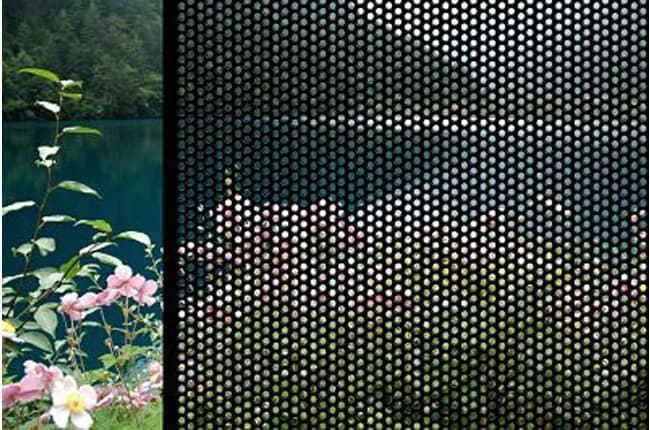
2mm perforated aluminium mesh, powder coated black, 40 percent view through and corrosion resistant, with a 7 year product warranty from the date of installation, conditions apply. Window grilles and hinged and sliding doors have passed dynamic impact, pull, jemmy, knife shear and probe testing, with the doors tested using three point locking hardware. The room with the outlook and the room that takes the afternoon sun are frequently the same room, and the sun is the half people underestimate when they are choosing a screen for the view. PERFGUARD is the panel option there, because it is stated at about 40 percent view through and does sun screening and privacy alongside the security function, so the trade off is a published figure rather than a promise.

Side by side comparison of a garden view seen directly and through black perforated aluminium screen mesh

Diamond Grille Security Screens

The diamond pattern security screen, and the cost effective option in the range. It can be combined with fibreglass, pet mesh or DVA one way vision mesh behind the grille. The job on a house here is often a set of openings rather than one front door, and diamond grille is the cost effective line that lets the window screens get done in the same visit as the doors instead of waiting for a second budget.

Colonial Casting Security Doors

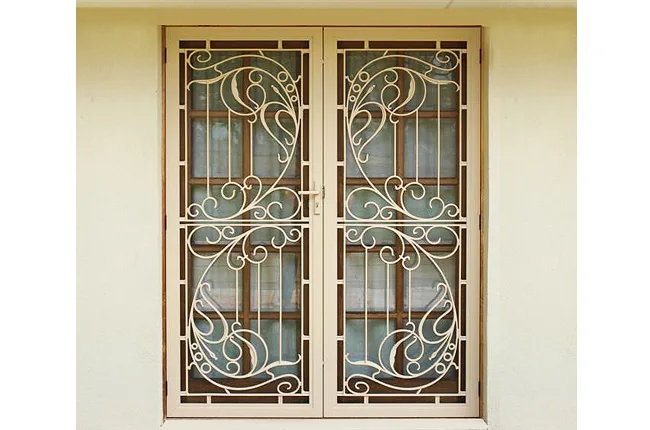
Decorative cast security doors in a modern style or a heritage range, used on a front door or to enclose a patio. Colonial casting is the decorative line, used on a front entry or to close in a patio. Enclosing an outdoor room is a different brief from securing a doorway, and it is usually the opening people care most about the look of.

Pair of cream decorative cast security screen doors with a scroll pattern over timber windows

Onsite Repairs and Hardware Replacement

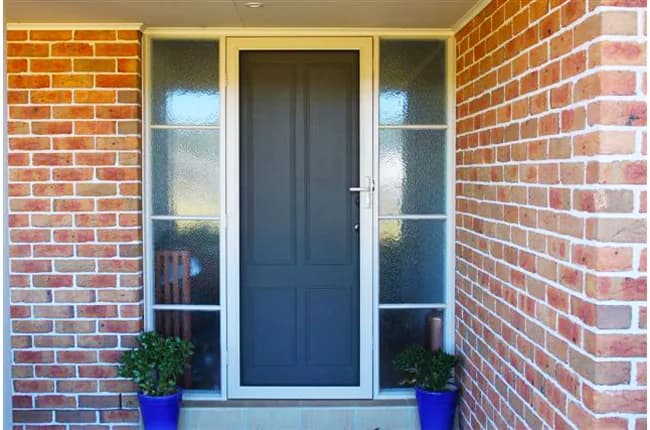
Repairs to existing security doors and screens at your property: lock cylinders and complete locks, wheels and tracks on sliding doors, door closers, hinges, triple locks and patio bolts, plus pet doors fitted to existing security doors. The calls arrive as symptoms rather than diagnoses: the key jams, the handle has gone, the slider bounces or jumps the track. Where the mesh is still sound, that is hardware, and hardware is a repair rather than a replacement.

Hinged security screen door fitted over a grey front door on a brick home entry

Flyscreens and Specialty Mesh

Flyscreens and the mesh options behind them: fibreglass, pet mesh, DVA one way vision privacy mesh, perforated aluminium and woven 316 marine grade stainless. Flats and semi-detached dwellings together make up a real share of the stock here, so windows sit close to a neighbour more often than a house majority suggests. DVA one way vision mesh answers that, but it is a privacy mesh rather than a security product on its own, so it goes behind a diamond grille or colonial cast screen when you want both. Pet mesh is the other specialty infill.

Open plan living room looking through black-framed security screen doors to a pool and palms
Licensed, tested, locally made

Credentials you can check

Cairns Security Doors is a Cairns based sole trader that makes every door and screen to measure locally, and measures and fits at the property; there is no showroom or premises to visit. The stainless range is 316 marine grade stainless steel mesh in T6 grade high tensile extruded aluminium frames, manufactured and finished in Queensland in a variety of colours, and it has been put through dynamic impact, knife shear, anti-jemmy, pull and probe testing. There is an Australian Standard covering security screen doors and window grilles as products, and a separate Australian Standard covering their installation. Ask us for the current test certificate for whichever range you are considering rather than taking a number on trust. QBCC licence 1199847 is the number this business publishes for itself, and the QBCC online licence search is where a homeowner confirms it rather than taking it from a web page.

QBCC Licensed Contractor
Queensland Building and Construction Commission licence 1199847
Verify this
Tested Security Screens
SCREENGUARD states its stainless steel mesh screens pass dynamic impact, knife shear, anti-jemmy, and pull and probe testing. PERFGUARD adds a probe test, with hinged and sliding doors tested using three point locking hardware.
10 Year Manufacturer's Warranty
SCREENGUARD products carry a full 10 year manufacturer's warranty. Regular maintenance with SCREENGUARD Powawash is required to comply.
Locally Made
Family owned and operated. Doors and screens are made to measure and manufactured in Cairns; SCREENGUARD frames are manufactured and finished in Queensland.

Questions we get asked

I want the glass protected if a cyclone comes. Is that what a security screen does?

No. Queensland's cyclone guidance puts debris screens in a category of their own, separate from sun screens and security screens, and says an effective one earns that description by being tested for resistance to debris impact. That is not what these four ranges are, and none of them is offered with a rating of any kind against debris, storm or wind. If protecting glazing is the goal, ask a supplier for a product that carries that rating.

Do we get a say in the colour and finish?

On the stainless range, yes: SCREENGUARD is finished in a choice of colours. PERFGUARD works the other way, since its panel comes in a single finish, so there the colour is part of the product rather than a decision to make. Diamond Grille is a visible diamond pattern and Colonial Casting a decorative cast, so on those two the pattern is the bigger visual decision. Either way it is worth settling at the measure, alongside which range goes on which opening.

What can a repair actually fix, and what needs a new screen?

Repairs cover the moving and locking parts of a screen that is otherwise sound. A panel that has been cut, pushed out of its frame or corroded through is not a hardware fault, and no lock or wheel set brings it back. So the test is whether the frame and the panel are still doing their job. If they are, then a jamming key, a broken handle or a slider that jumps its track is the right call to make.

Do you come out to Trinity Beach for a single door, or does it need to be the whole house?

A single door is a job in its own right. Each screen is manufactured for the one opening, so the sizes have to come off the door itself and the fitting happens at the house. A repair works the same way: a fault in the hardware is a visit rather than a project. Name the doors and windows you want looked at when you call, and one visit covers the lot.

Our back door is a slider and the front is hinged. Is that two different jobs?

Same visit, different specifications. The perforated aluminium range is made as window grilles and as hinged and sliding doors, so both openings are covered by the same product line. The difference turns up later rather than at the measure: a slider carries moving parts a hinged door does not, and the wheels and the track are the parts that wear and get replaced.

How are your security doors tested?

SCREENGUARD stainless steel mesh doors are put through dynamic impact, knife shear, anti-jemmy, and pull and probe testing. PERFGUARD window grilles and hinged and sliding doors pass the same set plus a probe test, with the doors tested using three point locking hardware. Ask us for the current test certificate for whichever product you are considering and we will pass it on.

Are your security doors made to measure?

Yes. Every door and screen is made to measure rather than bought off the shelf, and it is manufactured here in Cairns. SCREENGUARD aluminium frames use T6 grade high tensile extruded aluminium, manufactured and finished in Queensland in a range of colours. Get in touch to arrange a measure for your doors or windows.

Can you repair my existing security door?

Yes, and we repair onsite. The common jobs are replacing a lock cylinder or the complete lock when a door will not close properly or the key jams, and replacing the wheels or track work on sliding doors that bounce, jam, or jump off the track. We also replace door closers, hinges, triple locks and patio bolts.

Which Cairns suburbs do you service?

We service Cairns and the surrounding areas. That covers the northern beaches from Machans Beach up to Palm Cove, the northern suburbs around Smithfield, Redlynch and Freshwater, the Cairns city suburbs, and the southside through to Gordonvale. Check our service areas page for the full list of suburbs, or call us to confirm your street.

Can you fit a pet door to my security door?

Yes, though there is a trade-off worth knowing first. Industry guidance from the National Security Screen Association is that cutting a pet door into a security door voids its compliance, because the door is no longer the product that was tested. Plenty of people still choose it. Talk to us about where the pet door goes, and ask about pet mesh if you have animals.

Need security doors in Trinity Beach?

Three things make a Trinity Beach measure go quicker. Bring anything a builder, engineer or building certifier has already said about the site, because a wind classification comes from them and is not something we work out for you. Name the openings you actually use, the deck door, the bedroom that takes the afternoon sun, the window with the outlook, because by the state's own rule of thumb the ones with the most open outlook sit at the exposed end of the scale. And if a screen is already jamming, sticking or bouncing off its track, say so, because that is a repair conversation and a different visit. Call us or send through the quote form and we will arrange a measure.