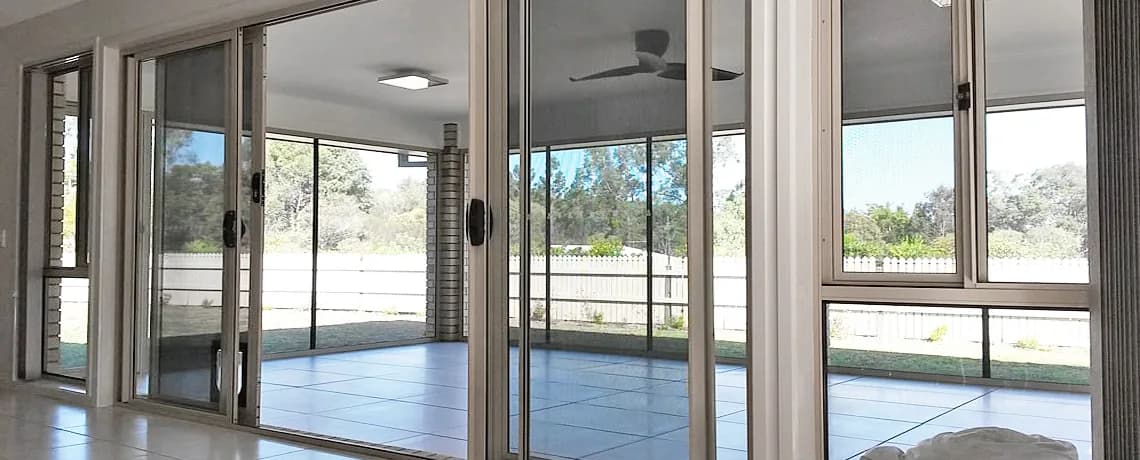
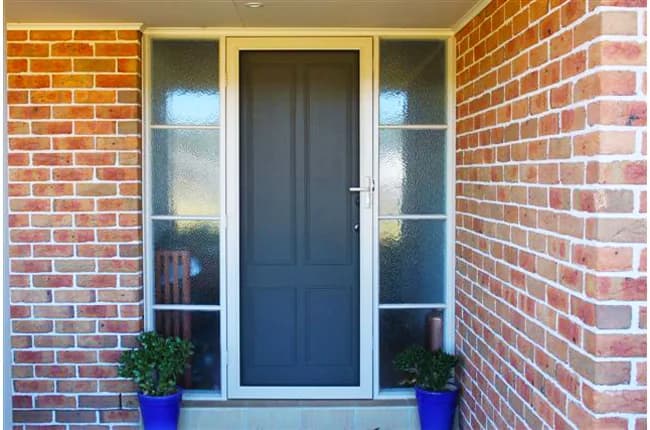
To secure a sliding glass door, lock it with a key every time, add a keyed patio bolt, stop the panel lifting off its rail, and put a tested, locked sliding security screen over the glass. Each layer covers a gap the one before it leaves. Police advice in Queensland and the Northern Territory keeps coming back to the same weak spot: doors left open or unlocked.
9 sections, a comparison table and 6 questions, about 10 minutes
This guide works from the cheapest fix to the strongest, using police checklists and the lock makers' own product details, and ends with a checklist you can take to each slider in the house.
The short answer: yes, a sliding door can be secured, in layers
A sliding glass door can be locked and made much harder to force, but no single device does the whole job. The latch keeps the door shut. A patio bolt pins the panel so it can't slide. An anti-lift device stops it being raised off the rail. A security screen puts a tested barrier in front of the glass.
Police and council checklists name the same layers. The Northern Territory Police home security checklist has its own line for sliding doors and says keyed patio bolts on sliding doors strengthen the security of these doors. Campbelltown City Council's home security checklist says patio doors should have special locks fitted top and bottom unless they have a multi-locking system, plus an anti-lift device to stop a thief simply lifting the door off its rail. Queensland Police also list patio bolts in their Home Security Guide, among the locks to check on internal areas.
None of it helps on a door that's left open. The sections below take each layer in turn.
How sliding doors get broken into: police point to open and unlocked doors
Police advice puts open and unlocked doors first. Queensland Police say homes with windows or doors left open or unsecured are more likely to attract a potential burglar. Townsville police put it plainly for units: many high-rise break-ins occur through open or unlocked balcony doors. The same officers warned that criminals can climb drainpipes, parked vehicles and trees to reach balconies, so an upstairs slider isn't out of reach.
Police also describe most break-ins as opportunistic, especially where entry looks quick and easy. A glass slider left open for the breeze on a warm Cairns night fits that description.
Once a slider is shut and locked, the checklists above target two weak points: the panel sliding along its track, and the panel lifting off its rail. That's why the fixes below come in pairs. We couldn't find Australian figures that break burglary entry down by door type, so this guide doesn't quote one. For the wider evidence, read do security screens stop burglars.
Start with the latch you already have
Check the lock already on the door before you buy anything. Close the slider, lock it, then try to slide it open from inside. It should hold firm. Check that the latch catches every time you close it, and not only when you push the door hard against the frame.
Then make locking it a habit. Queensland Police advise keeping doors locked with a key even when you are home. Townsville police add that external doors and screens to balconies should always be locked when the unit is unoccupied or at night.
Keys need a little thought. The QPS Home Security Guide notes that a single key for all door locks assists safe exit in an emergency. Tasmania Fire Service adds that when you're home, you shouldn't deadlock your doors unless the key is left in the lock. If a slider is a second way out of a bedroom or living area, keep its key in the lock while people are home.
If the door won't close fully or keeps jumping its track, get that sorted first, because every fix below assumes the door closes against the frame. Our guide to a sliding door that comes off its track covers the rollers and track.
Patio bolts and a dowel in the track
A keyed patio bolt is the next step up from the latch, and it's the one police checklists name for sliding doors. Lockwood describes its 680 patio bolt as a surface mounted product designed to improve security on residential sliding and hinged doors, and says it suits a wide range of aluminium and timber sliding patio doors. It lists a steel bolt, a solid brass 5 pin cylinder and concealed fixing screws. The 680 can be keyed alike within Lockwood's keying systems, so one key can work several locks, which fits the QPS point about a single key for safe exit.
On placement, Campbelltown's checklist says patio doors should have locks fitted top and bottom unless the door already has a multi-locking system.
The same checklist covers the dowel. It advises placing a wood dowel between a rear sliding door and the frame, and using a slide bolt lock to reinforce security. A dowel cut to length and dropped into the bottom track stops the panel sliding open, but it can only be set from inside and it does nothing to stop the panel lifting. Treat it as a backup to a lock, never a stand-in for one.
Stopping the panel lifting off its rail
A sliding panel rides on rollers in a track, so locking it against sliding isn't the whole answer. Campbelltown City Council's checklist says to install an anti-lift device to stop a thief simply lifting the door off its rail.
Lock makers build the same idea into sliding security door locks. Austral Lock by Gainsborough says its sliding security door locks have an anti-lift pin on the catch plate that engages the lock body to prevent the sliding door being lifted from the frame. Alspec says the same of its sliding security door lock, which also has a self-latching bolt that engages automatically when the door is closed and works with high and low rod multipoint kits. Those locks are made for sliding security screen doors, so on a slider with a security screen, check whether the screen's lock has one.
For the glass panel itself, frames differ, so ask a locksmith or glazier which anti-lift device suits your door. Don't lift a glass panel out of its track yourself to fit anything. That's a glazier's job, and the QBCC has a licence class for it: its glass, glazing and aluminium class covers glazing and reglazing buildings and installing windows and doors.
A sliding security screen over the glass
A sliding security screen adds what the hardware on the glass can't: a tested barrier in front of the glass, so the glass itself can stay open for air with the screen shut and locked. Queensland Police advise considering security screen doors designed and installed to Australian Standards, and Far North police urged residents in the greater Cairns area to make sure security screens and doors are locked and secured using fitted dead bolts.
If the screen's lock has an anti-lift pin, like the Austral and Alspec sliding locks above, that pin stops the screen panel being lifted out of its tracks. The glass door behind it still needs its own lock and patio bolt for the times the screen is left open.
What each layer stops, and what it leaves open
Layer
What it stops
What it leaves open
Locking the latch with a key
The door being opened by hand while you're out or asleep
Depends on the habit of locking it every time
Keyed patio bolt
The panel sliding open
The panel lifting, unless an anti-lift device is fitted too
Dowel in the bottom track
The panel sliding open
Can only be set from inside and does nothing about lifting
Anti-lift device or pin
The panel being lifted off its rail
Still needs a lock to stop the door sliding
Sliding security screen
Entry through the opening, even with the glass open
Only works locked, and only if it's labelled and properly installed
What each layer stops, and what it leaves open
Locking the latch with a key
What it stopsThe door being opened by hand while you're out or asleep
What it leaves openDepends on the habit of locking it every time
Keyed patio bolt
What it stopsThe panel sliding open
What it leaves openThe panel lifting, unless an anti-lift device is fitted too
Dowel in the bottom track
What it stopsThe panel sliding open
What it leaves openCan only be set from inside and does nothing about lifting
Anti-lift device or pin
What it stopsThe panel being lifted off its rail
What it leaves openStill needs a lock to stop the door sliding
Sliding security screen
What it stopsEntry through the opening, even with the glass open
What it leaves openOnly works locked, and only if it's labelled and properly installed
Checking a sliding screen is a real security screen
Not everything sold as a screen door is a security door. The National Security Screen Association's rule is short: if it isn't labelled, it isn't a security door. It also says a barrier door lacks the strength and durability to give reliable protection, and that a 3-point lock is likely to stop the top or bottom of the door being wrenched open. SCREENGUARD, the 316 stainless mesh range we build in, says its sliding doors use a three-point locking system and are tested to the Australian Standard for security screens, and each one is custom-made to suit narrow or wide openings.
Fitting matters too. The NSSA says installing to the standard is just as important as the security door itself. We hold QBCC licence 1199847, and our security doors and screens are made to measure in Cairns. If you're still choosing between door types, read how hinged and sliding security doors compare.
A checklist for each sliding door
Walk the house and run each slider through this list, from the cheapest check down. Balcony and patio sliders come first, since police link many unit break-ins to unlocked balcony doors.
Close and lock the door, then try to slide it open from inside. It shouldn't move.
Lock it with the key at night and whenever the house is empty, upstairs sliders included.
While people are home, keep the key in the slider's lock, so anyone can get out fast in a fire.
Fit a keyed patio bolt, top and bottom unless the door has a multi-locking system.
Keep a dowel cut to length in the bottom track as a backup, never instead of a lock.
Ask a locksmith or glazier about an anti-lift device for the glass panel.
On a security screen, check for a compliance label, a three-point lock and an anti-lift pin on the lock.
Make sure the slider still works as a way out in a fire. Queensland Police say grilles and shutters should allow an exit in an emergency.
Leave cracked or loose glass to a glazier, and keep the door locked until it's fixed.
When to call for a screen, a lock or a repair
Call when the hardware you have can't do its job: a latch that won't catch, a patio bolt that's seized or broken, a screen with no compliance label, or a slider with no screen at all on a door you like to leave open.
We do onsite repairs to locks, wheels and tracks. Patio bolts, triple locks, closers and hinges are all replaceable, and we replace lock cylinders and complete locks when a door won't close or a key jams. For a new sliding security screen, every door is made to measure and manufactured here in Cairns. To get a price, use the quote form on our contact page and tell us which door it is and what it's doing.
Questions we get asked
Can a sliding glass door be lifted off its track?
Some can, which is why home security checklists call for an anti-lift device. Campbelltown City Council's checklist says to fit one to stop a thief simply lifting the door off its rail. Lock makers such as Austral and Alspec put an anti-lift pin on the catch plate of their sliding security door locks for the same reason. Frames differ, so ask a locksmith or glazier which device suits your glass door.
Is a stick in the track enough to secure a sliding door?
No. A dowel or stick in the bottom track stops the panel sliding, but it can only be set from inside and does nothing about the panel lifting off its rail. The council checklist that recommends a wood dowel pairs it with a slide bolt lock to reinforce security. Use the dowel as a backup on top of a keyed lock and a patio bolt, then add an anti-lift device.
What is a patio bolt?
A patio bolt is a keyed bolt fitted to a sliding or hinged door to hold it closed. Lockwood's 680, for example, is surface mounted, suits aluminium and timber sliding patio doors, and has a steel bolt and a 5 pin cylinder. The Northern Territory Police checklist says keyed patio bolts strengthen sliding doors, and a council checklist advises locks top and bottom unless the door has a multi-locking system.
Does a security screen door protect a glass slider?
Yes, if it's a tested sliding security screen and it's locked. It puts a barrier in front of the glass, so you can open the glass for air with the screen shut. Look for a compliance label, since the NSSA says an unlabelled door isn't a security door, and a three-point lock, which it says is likely to stop the top or bottom being wrenched open.
Can I replace a cracked glass panel in a sliding door myself?
Leave the glass to a glazier. In Queensland the QBCC has a licence class for this work: its glass, glazing and aluminium class covers glazing and reglazing buildings and installing windows and doors. Your part is the safe stuff: keep the door shut and locked with the patio bolt on until it's fixed, and keep people clear of the cracked panel. A security screen over the opening doesn't change who should replace the glass.
Do you fit patio bolts in Cairns?
Patio bolts are on the list of hardware we replace, along with door closers, hinges, triple locks and lock cylinders, and we do onsite repairs to locks, wheels and tracks. For a glass slider that needs a security screen, we make sliding screens to measure here in Cairns. Use the quote form on our contact page, tell us which door it is and what's wrong, and we can talk through the options.
Where this comes from
The published sources this guide draws on, and the date each one was checked.