Security screens make a break-in harder and slower, and Queensland Police list them among the steps worth taking. They don't make a house burglar-proof. In one Australian study of active burglars, two-thirds said they usually got in through unlocked doors or windows, so a tested screen does its job when it's actually locked.
7 sections and 4 questions, about 7 minutes
This guide starts from the evidence: police advice, a study of active burglars by the Australian Institute of Criminology, and national crime survey figures. Then it covers what separates a real security screen from one that only looks the part.
The short answer: yes, if the screen is tested and locked
Security screens do help stop burglars, with two conditions. The screen has to be a tested security product, and it has to be locked. Queensland Police Service advice tells households to consider fitting security screen doors designed and installed to Australian standards, and to lock them with the key. Its Safer Together sheet lists quality locks and security screens among the simple steps that make a home harder to target.
The research points the same way. In a study by the Australian Institute of Criminology (AIC), burglars described effective security as switched on alarms, security screens, roller shutters and dogs. The researchers concluded that the harder and longer a house takes to get into, the more it deters active burglars.
What a screen can't promise is that nobody ever gets in. A few of the same burglars said that if they wanted to break in, they would. So think of a security screen as something that raises the effort and cuts out the easy option. That's a lot. It isn't everything.
How break-ins in Australia usually happen
Many break-ins are crimes of opportunity, and in one Australian study most burglars said they got in quickly and without a plan. The Australian Bureau of Statistics estimates 1.8% of households had a break-in in 2024-25, and slightly more, 2.0%, had an attempted one. Attempts were more common outside the capital cities (2.5%) than inside them (1.8%), and Cairns sits in that first group.
Queensland Police describe many house break-ins as crimes of opportunity, with entry through an open or unlocked door or window. The AIC study backs that up. Researchers surveyed people held in police custody in Western Australia, and the 69 who admitted a burglary in the past year gave a clear picture.
Two-thirds usually got in through unlocked doors or windows. The rest broke a door or window.
Three-quarters took less than five minutes to get inside.
Most (57.8%) said their burglaries were spontaneous, not planned.
The most common homeowner mistake they named was leaving doors or windows open or unlocked.
Delay and deterrence: what a screen adds
A security screen adds two things: a reason to pass your house by, and a delay if someone tries anyway. Burglars in the AIC study defined a house with minimal security as one with no dogs, no working alarm, and no security screens or roller shutters. A house with screens fails that test from the start.
The delay side matters because of how fast most entries are. When three-quarters of burglars are inside within five minutes, anything that makes a door or window slower to beat works against them. The same burglars mostly avoided homes and streets with people about, because they thought activity raised their chance of being spotted. Time spent on a locked screen is time someone might see them.
Keep expectations honest, though. Asked what would put them off, 19% named grilled windows and doors, well behind a dog (61.4%) and a working alarm system (49.1%). Fake alarms, fake security systems and fake cameras didn't deter them at all. Screens rate as real security in that study. They just do more as one layer among several.
A security screen only works when it's locked
An unlocked security screen does nothing for you, and locking it is the habit that matters most in a warm climate. Police in the greater Cairns area have urged residents to make sure security screens and doors are locked and secured with fitted dead bolts. Queensland Police also tell people to lock doors and windows even when they're home.
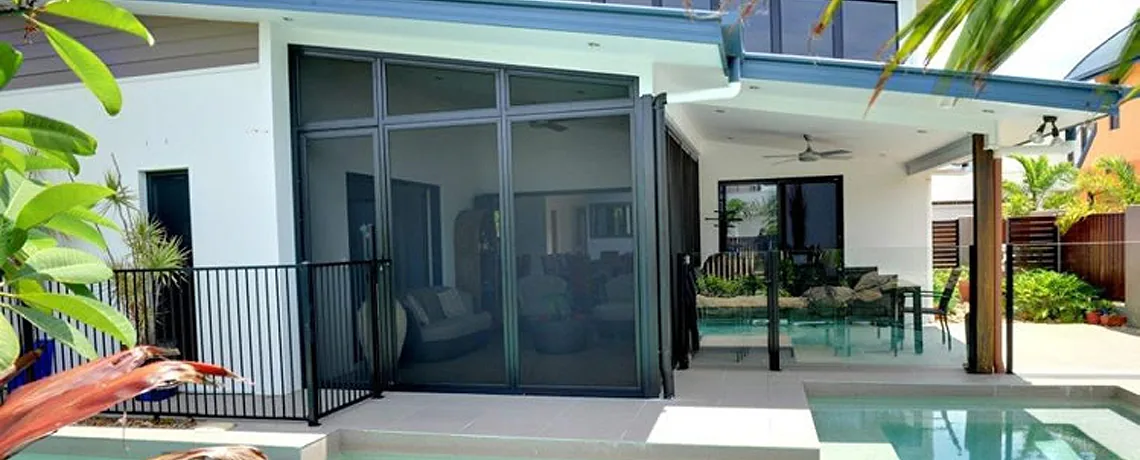
Warm weather makes that harder. The AIC researchers noted that Australians often leave windows and doors open in the warmer months, and that burglary peaks then for that reason. If you like the house open for the breeze, a locked screen is how you keep doing it: the timber door stays open, the screen stays shut and keyed. The National Security Screen Association describes a security screen as a physical barrier that lets air through while keeping insects and intruders out.
Sliding doors onto balconies and patios need the same care. Townsville police say many high-rise break-ins happen through open or unlocked balcony doors, and they advise keeping balcony doors and screens locked when the unit is empty or at night. One more point police make plainly: never leave the key sitting in the lock.
What makes a screen a security screen
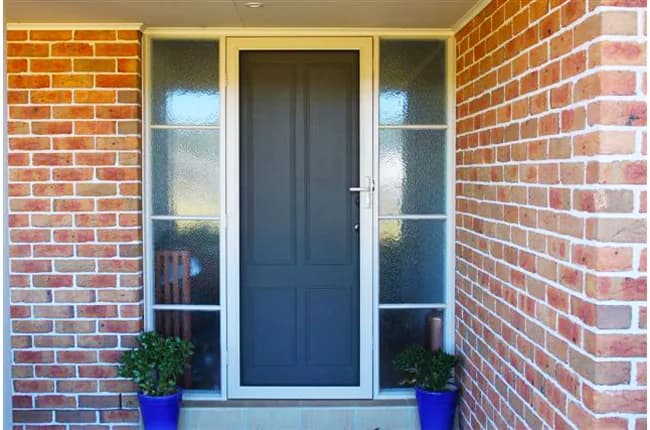
A security screen is one that has been tested and labelled, and a look-alike won't give you the protection this guide describes. The National Security Screen Association says the term security door can only be used if the door can be shown to meet the Australian Standards. It also says a barrier door lacks the strength and durability to give reliable protection. Before you buy, check for these:
A compliance label. The association's rule is simple: if it isn't labelled, it isn't a security door.
Testing that covers knife shear, jemmy, probe, corrosion, pull and impact.
A 3-point lock, which the association says makes it harder to force the door open at the top or bottom.
A key cylinder with at least five pins.
At least three fixed-pin hinges, ideally recessed so they're hard to tamper with.
A deep, sturdy receiver channel in the frame, so the infill can't easily be pushed out.
Fitting and the screens we make
How a screen is fitted matters as much as what it's made of. The association warns that you may be able to put a screen up yourself and make it work, yet still not get proper security from it. That's why it advises against fitting your own. When a quote arrives, check that it names the product, the lock and the hinges, so you can hold it up against the checklist above.
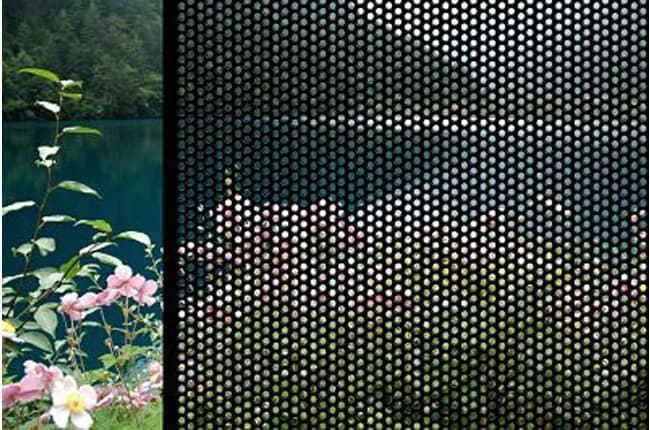
SCREENGUARD, the 316 stainless steel mesh range we fit, lists its hinged doors, sliding doors and windows as security tested on its own site. Every door and screen we supply is made to measure in Cairns rather than supplied in a stock size. If you're weighing up which mesh suits each opening, the range of mesh page compares the materials side by side and says which ones aren't security products on their own.
Other steps police recommend alongside screens
Police advice treats a security screen as one layer, and most of the other layers are cheap habits. This is what Queensland Police and the AIC research point to:
Make sure every external door, including the garage, is solid and fitted with a quality deadlock.
Fit window locks that meet Australian standards, and don't leave the keys in them.
Keep car keys and valuables out of sight and away from doors and windows. Police say offenders often break in to steal car keys.
Trim trees and shrubs so the house can be seen, and add sensor lights.
Have someone collect your mail while you're away. Leaving lights and a radio on at night didn't fool the burglars in the AIC study, who called it one of the oldest tricks in the book.
A dog that barks helps. It doesn't need to be big.
Keep any alarm switched on. Burglars named working alarms as a deterrent.
Questions we get asked
Are security screens worth it?
For most houses, yes, provided you buy a tested screen and keep it locked. Burglars in Australian research counted security screens as real security, and a locked screen removes the unlocked opening most of them relied on. The value drops away if the product is a barrier door with no compliance label, or if it sits unlocked all day. Spend first on the doors and windows you open most.
Which doors and windows should get security screens first?
Start with the openings you leave open for air, then the ones hidden from the street. Burglars in the AIC study said back and laundry doors could be used while owners were busy elsewhere, and that they reached houses through backyards screened by fences and gardens. Sliding doors onto patios and balconies come next, since police link many unit break-ins to unlocked balcony doors. Then work around to the front.
Will a security screen stop someone getting in through a window?
A tested, locked window screen makes a window harder and slower to get through, though nothing is a promise. A real security screen is tested for knife shear, jemmy, probe, pull and impact. Since two-thirds of burglars in the AIC study used unlocked openings, a screen on a window you like to leave open closes that route. Our range of mesh page compares the five meshes we fit.
Do you install security screens across Cairns and the northern beaches?
Yes. We're based at Kewarra Beach and cover Cairns and the surrounding areas, from Machans Beach and the northern beaches up to Palm Cove, through the northern and city suburbs, and south to Gordonvale. The screens are manufactured in Cairns for each opening. If an existing screen door will not close or the key jams, we replace lock cylinders and complete locks as well.
Where this comes from
The published sources this guide draws on, and the date each one was checked.