How long a security screen door lasts, and the signs it is due
Updated
The short answer
There is no single honest number for how long a security screen door lasts. None of the maker and industry documents behind this guide give a service life in years. What they do give is a warranty period: SCREENGUARD's runs 10 years and PERFGUARD's 7 years from installation, both with conditions. A warranty tells you what the maker stands behind, not when the door wears out.
8 sections, a comparison table and 6 questions, about 11 minutes
In practice a security door is a set of parts that age at different rates. Rollers, locks, hinges and closers wear with use and salt. Mesh and frame finish depend on the grade of metal and how often salt gets washed off. This guide breaks the door into those parts, explains what the warranty and wash schedule mean on the coast, and gives a simple test for repairing a door or replacing it.
The warranty is the only figure the makers cited here put in writing, and it measures cover rather than wear. SCREENGUARD covers its screens for 10 years from installation against defects in materials and manufacturing, provided the care and maintenance schedule has been kept. PERFGUARD products carry a 7 year warranty from the date of installation, conditions applying.
That cover has edges. SCREENGUARD says its warranty does not apply to damage caused by abuse, fire, accident, acts of God or alteration of the product. A door that has been cut down, re-meshed by someone else or knocked by a trailer is outside it, however young it is. SCREENGUARD also notes that nothing in its warranty limits your rights under the Australian Consumer Law.
So read the warranty as what the maker stands behind, on the condition that the screen is looked after. How long a door keeps working in practice depends on the parts below, the grade of metal and how close the house sits to salt water.
What wears first: often the moving parts
Rollers, locks, hinges and closers work every time the door is used, and salt and grit reach the track and all of them. SCREENGUARD says salt and grit do more harm to a lock cylinder than to mesh.
Hardware makers write their care around that. Austral Lock's instructions for its Elegance XC lock ask for an annual check that the door still has the correct clearances and opens and closes without obstruction, and for the strike plates to be wiped every quarter. Gainsborough says an extreme climate or a dusty spot can affect the lubricant its hardware leaves the factory with, so it may need re-lubricating. A&L Windows says the operational life of its products is increased by light machine oil on moving parts, hinges and slides.
The useful part is that these parts can be swapped. Rolltrak, which supplies screen door rollers, says a door that no longer slides smoothly may need new rollers rather than a whole new door. The table below sets out each part.
Security door parts, what wears them, and how each is usually dealt with
What wears it
Maker's care step
Usually fixed by
Sliding rollers and track
Grit, standing water, scraping
Clear the track and drainage slots
New rollers or track work
Lock and cylinder
Salt and grit in the cylinder
Wipe the strike plate quarterly
A new cylinder or complete lock
Hinges and closer
Use, salt, a door out of clearance
Annual check of clearances
New hinges or a new closer
Stainless mesh
Salt left on the surface, sheltered spots
Wash on the warranty schedule
Repolishing if pitted, a new screen if distorted
Powder coated frame
UV, salt residue, trapped water
Wash residues off on schedule
A new screen if the frame has failed
Security door parts, what wears them, and how each is usually dealt with
Sliding rollers and track
Maker's care stepGrit, standing water, scraping
Usually fixed byClear the track and drainage slots
New rollers or track work
Lock and cylinder
Maker's care stepSalt and grit in the cylinder
Usually fixed byWipe the strike plate quarterly
A new cylinder or complete lock
Hinges and closer
Maker's care stepUse, salt, a door out of clearance
Usually fixed byAnnual check of clearances
New hinges or a new closer
Stainless mesh
Maker's care stepSalt left on the surface, sheltered spots
Usually fixed byWash on the warranty schedule
Repolishing if pitted, a new screen if distorted
Powder coated frame
Maker's care stepUV, salt residue, trapped water
Usually fixed byWash residues off on schedule
A new screen if the frame has failed
Mesh and frame finish near the sea: grade and washing decide
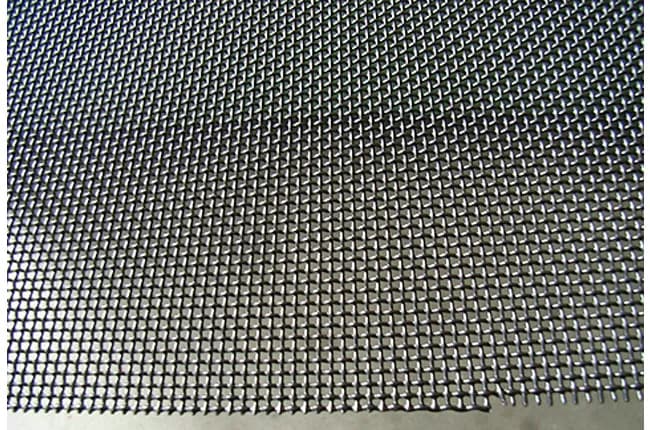
Mesh and frame finish last longest where the metal suits the exposure and salt is washed off on schedule. The Australian Stainless Steel Development Association (ASSDA) says grade 316, or an equivalent, should be the minimum within five kilometres of the surf. It warns that lower grades such as 304 will probably tea stain, or suffer more severe corrosion, in a marine environment. The SCREENGUARD mesh we fit is 316 marine grade stainless steel.
Tea staining on its own is not the end of a screen. ASSDA describes it as a cosmetic issue that does not affect the structural integrity or the lifetime of the steel. The more serious risk is water trapped in corners and crevices, which ASSDA says can lead to worse corrosion than tea staining. High humidity and heat, as in tropical climates, make conditions worse.
Frames need the same care. SCREENGUARD frames are T6 extruded aluminium with a powder coat, and the maker says the coating is what has to survive a decade of UV. Dulux Powder Coatings says regular removal of residues extends the effective life of a powder coat.
The warranty and the wash schedule: distance from the coast sets the interval
On a SCREENGUARD screen, washing is a warranty condition rather than a nicety. Regular maintenance with SCREENGUARD Powawash is required to keep the 10 year warranty valid, and SCREENGUARD sets the interval by how far the house is from the coast. Within 5 km of the coast it asks for a wash every 2 weeks.
Sheltered doors need the closest watch. SCREENGUARD points out that a door under a deep verandah or eave never gets rinsed by rain, so deposits accumulate there. That matches ASSDA's view that conditions are very aggressive for stainless steel in rain-sheltered spots.
Hardware carries its own schedule. The same Austral Lock instructions ask for powder coated surfaces to be cleaned every two to three months in coastal areas, and ask owners to record maintenance in a log to protect the warranty. Keeping a simple note of wash dates for the door and its lock costs nothing and helps if a claim is ever needed. Our cleaning guide covers the routine itself.
Within 5 km of the coast, marine or heavy industrial: every 2 weeks
About 10 km from the coast or high traffic areas: every 3 months
About 15 km from the coast, rural or suburban: every 6 months
Signs a part needs replacing
A single worn part usually shows itself before the door as a whole is in trouble. The signs below follow the hardware makers' care notes. Each points to a part that can be checked or replaced on its own, and our guide to common security screen door problems matches each symptom to its likely cause.
Two warnings sit alongside the list. A&L Windows says not to keep using a sliding door that scrapes on its track, because it causes scoring and possible failure of the rollers. Austral Lock's instructions for its Elegance XC lock say the lock assembly is lubricated for life and shouldn't be taken apart by the user, so a fault in a lock like that is a replacement job rather than a strip-down. If the lock or the slide is the problem, our guides to a lock that won't work and a sliding door off its track go further.
A slider that runs rough, grinds or scrapes along the track
Rollers that are bent, broken or no longer hold the door level
A key that turns stiffly or grinds in the lock
A door that drags, or no longer closes and latches without a push
A door that has dropped on its hinges, so the gap to the strike plate has changed
Signs the screen itself needs assessing or replacing
The screen itself is due when the mesh or frame has failed in a way parts can't fix. Pitting is a sign to have the mesh assessed rather than a verdict: ASSDA says a pitted stainless surface will probably need mechanical repolishing, which is a long way past a wash. Tea staining that keeps coming back on a beachfront house can point to a grade that doesn't suit the exposure, since ASSDA expects grades like 304 to stain near the sea.
Distorted mesh is another limit. SCREENGUARD notes that mesh is tensioned in its frame and that a high-pressure washer can distort it. A security screen also has to be the product that was tested: the National Security Screen Association (NSSA) says a security screen must pass testing to the Australian Standard for security screens and carry a compliance label. A patched or altered panel may no longer match the product that was tested and labelled, which our guide to torn fly screens and security mesh explains.
Pitting on the mesh, not just a brown film that washes off, which calls for an assessment
Mesh that bulges, has pulled from the frame or has been cut
Corrosion lifting the powder coat at frame corners and joints
A frame that has twisted, so the door no longer sits square
A missing or unreadable compliance label on a door you rely on for security
Repair or replace: a simple test
Repair is usually worth it while the mesh and frame are sound and the fault is in a part. Replacement makes sense when the screen itself has failed. Work through these steps in order and stop at the first one that gives a clear answer.
Keep the boundary in mind as you go. Washing, looking and the checks in the maker's care notes are owner jobs. Lifting a door off its track, opening a lock, re-hanging or packing a door, and any mesh work are repair jobs. The NSSA says compliant security doors are made and installed to very tight tolerances with specialised fixings, and recommends against DIY installation. In Queensland, the QBCC lists fabricating and installing security screens and doors within its glass, glazing and aluminium licence class.
Check the warranty card first. If the door is inside its period and the care schedule was kept, start with the supplier who installed it.
Look at the mesh and frame. Distorted mesh or a twisted frame means the screen is due, whatever the hardware is like. Pitting is beyond a wash and needs assessing, since ASSDA says a pitted surface will probably need mechanical repolishing.
If the mesh and frame are sound, list the faulty parts: rollers, lock, hinges, closer.
Ask whether those parts can be replaced on the existing door. Rollers, locks, hinges and closers usually can.
Compare the repair with a new made to measure door, and factor in whether the mesh grade suits how close you are to the sea.
Next steps: compare the mesh, or book a repair
If the door is sound and only a part has worn, a repair visit is the quicker fix. We repair at your property around Cairns, replacing lock cylinders or complete locks, wheels and track work on sliding doors, and door closers, hinges, triple locks and patio bolts. See what a visit covers on our onsite repairs page, and tell us what the door is doing through the quote form on our contact page.
It depends on the product, and it's cover rather than a lifespan. SCREENGUARD gives a full 10 year manufacturer's warranty, valid while regular maintenance with SCREENGUARD Powawash is kept up. PERFGUARD carries 7 years from the date of installation, with conditions. SCREENGUARD's cover excludes damage from abuse, fire, accident, acts of God or alteration. Keep the warranty card you get at installation and a note of when you washed the screen.
Do stainless security screens last longer than aluminium ones near the beach?
No maker we cite publishes service life in years for either, so we won't put a number on it. What is documented is the warranty and the grade. The SCREENGUARD 316 stainless mesh we fit carries 10 years and PERFGUARD's perforated mesh 7 years. ASSDA says 316 should be the minimum within five kilometres of the surf, and that 304 will probably stain or corrode there. SCREENGUARD ties regular washing with Powawash to its warranty, and Dulux says removing residues extends the life of powder coat.
Is it worth repairing an old security door?
Usually, if the mesh and frame are sound. Rollers, locks, hinges and closers can be replaced on an existing door, and Rolltrak notes that new rollers can fix a slider that no longer runs smoothly without replacing the door. Repair stops making sense when the mesh is distorted, the frame has twisted, or the door has been altered so it may no longer match the product that was tested and labelled.
Does washing really make a screen last longer?
For a powder coated frame, yes. On stainless mesh it mainly keeps off cosmetic staining and stops water sitting where it does harm. Dulux Powder Coatings says regular removal of residues extends the effective life of powder coat. ASSDA says water trapped in corners and crevices can lead to more serious corrosion than tea staining. On a SCREENGUARD screen, washing with Powawash is also a warranty condition, every 2 weeks within 5 km of the coast. Doors under deep eaves need it most, because rain never rinses them.
Can I replace parts on my security door myself?
Washing and simple checks are fine, but most part swaps are repair jobs. Austral Lock's instructions for its Elegance XC lock say the lock assembly shouldn't be taken apart by the user, and replacing rollers means lifting the door off its track. The NSSA says compliant security doors are made and installed to very tight tolerances with specialised fixings and recommends against DIY installation. Never cut or alter security mesh to make a part fit.
Do you service older security doors in Cairns?
Yes. We repair at your property around Cairns. The work covers lock cylinders and complete locks, wheels and track work on sliding doors, and closers, hinges, triple locks and patio bolts. Tell us what the door is doing through the quote form on our contact page, and if the screen itself is past repair we can make a replacement to measure.
Where this comes from
The published sources this guide draws on, and the date each one was checked.