316 or 304 stainless steel mesh: why the grade matters near the sea
Updated
The short answer
For a house near salt air, 316 is the stronger choice of the two. It carries molybdenum, which the 304 specification doesn't, and that helps it resist pitting from salt. Australia's stainless steel industry body advises 316, or a grade with equivalent corrosion resistance, as the minimum within about five kilometres of the surf.
6 sections and 5 questions, about 8 minutes
Grade isn't the whole story, though. Where the screen sits, how often it gets a rinse and what it's fixed with all count. This guide works through each one, using the Australian Stainless Steel Development Association's published guidance.
Grade 316 handles salt better than grade 304, and that's the difference that matters on a coastal house. The Australian Stainless Steel Development Association (ASSDA) says 316 has virtually the same mechanical and fabrication characteristics as 304, with better corrosion resistance, particularly to pitting in chloride environments. ASSDA treats the salts that do the damage as chlorides. So the two grades behave alike in the workshop and very differently on a verandah facing the water.
304 isn't a poor metal. ASSDA calls it the place to start, and chances are some of your cutlery, your saucepans and your sink are made from it. Indoors, ASSDA says, tea staining is rarely a problem.
The coast is where ASSDA gets blunt. It says lower alloyed, less expensive grades such as 304 will probably tea stain, or suffer worse corrosion, in a marine environment. It adds that 304 has occasionally been used successfully in those conditions, but it isn't recommended. That's the trade: 304 costs less up front, and 316 is the grade the industry body points to once salt is in the air. How far from the water that starts to bite is covered further down.
What makes 316 different from 304
Molybdenum is the headline difference between 316 and 304. ASSDA's composition tables list 316 with 2 to 3 percent molybdenum, while the 304 specification lists none. 316 also runs a little lower in chromium (16 to 18 percent against 18 to 20) and higher in nickel (10 to 14 percent against 8 to 10.5).
That small dose of molybdenum does a lot of work. ASSDA ranks grades with a number called the Pitting Resistance Equivalent, or PRE. You get it by adding the chromium percentage, 3.3 times the molybdenum and 16 times the nitrogen. Molybdenum counts more than three times as much as chromium in that sum, and ASSDA says it improves corrosion resistance, especially where chlorides are present.
ASSDA's rough guide is a PRE of about 18 away from marine influences and about 24 for marine air. Severe marine spots may need about 34. Run the specification numbers and 304 sits near the inland figure, while 316 lands much closer to the marine one.
ASSDA notes 316 is often called the marine grade, and its main advantage over 304 is resisting pitting and crevice corrosion in warm, salty conditions.
Tea staining and pitting: what salt air does
Salt air causes two kinds of trouble on stainless mesh: tea staining on the surface and more serious corrosion where water gets trapped. ASSDA describes tea staining as brown discolouration of the surface caused by corrosion. It's cosmetic. It doesn't affect the strength or the life of the metal, but it makes a screen look neglected. Corners and crevices that hold water are a bigger worry, because ASSDA says they can lead to more serious corrosion than tea staining.
ASSDA names sea salt on the surface as one of the major causes. Sea salt stays wet until the air gets very dry, so a salty surface keeps corroding for longer. Heat and humidity make it worse: ASSDA singles out tropical climates, where a film of moisture dissolves salt deposits into a corrosive solution on the metal.
Cairns fits that description. The Bureau of Meteorology's long-term average 9am humidity at Cairns Aero is 72 percent.
Position matters too. ASSDA rates rain-sheltered spots, such as under eaves or in a building's rain shadow, as very aggressive. On a house, a screen tucked under a deep verandah roof is in exactly that kind of spot.
How close to the sea is close
About five kilometres from a surf beach is the zone ASSDA flags, or one kilometre from still salt water. Inside that band, tea staining is most likely, and ASSDA says the conditions get sharply worse the closer you get to the surf. Its advice is that grade 316, or a grade with equivalent corrosion resistance, should be the minimum within five kilometres of the surf.
There's no hard line. Wind, local shelter and higher temperatures can push tea staining out 20 kilometres or more from the surf. The flip side is that the effect is much less severe around sheltered bays. So two houses the same distance from the water can see quite different results.
In Cairns, a map alone won't settle it, because ASSDA says wind, shelter and temperature all shift where tea staining turns up. ASSDA also says tropical and high humidity areas are more at risk of tea staining, and Cairns is both, which is why the grade is worth settling for any house near the water.
Even 316 has limits. For splash zones, unwashed areas or rough surfaces, ASSDA says higher grades such as duplex stainless may be needed. For a screen on a beachfront house, that makes the care routine in the next section more important, not less.
Care matters as much as grade
Regular washing is what keeps either grade looking right near the sea. ASSDA says washing removes the salt deposits that cause corrosion, and calls it necessary to avoid tea staining. Rain does part of the job on exposed screens, and a light, regular wash covers the rest. Lower grades need more regular maintenance, so a 304 screen close to the water asks for more of your time than a 316 one.
Oils and waxes hold chlorides off for a while, but ASSDA notes they need renewing and tend to collect dirt and dull the surface. A plain wash is the better habit.
For SCREENGUARD screens, the 10 year manufacturer's warranty requires regular maintenance with SCREENGUARD Powawash. Our guide to cleaning security screens walks through a full routine. ASSDA's basic method for stainless is below.
Wash with soap or a mild detergent in warm water.
Rinse with clean, cold water.
Wipe dry if you want a better finish.
Skip abrasive cleaners and anything containing chlorides or bleach, which damage the surface.
Never use hydrochloric acid, which is sometimes used to clean cement or mortar residues.
What to ask when a quote says stainless
Ask which grade, and get it in writing. The word stainless on its own doesn't tell you, and ASSDA notes that appearance isn't a reliable way to tell which grade it is. Mill test certificates are normally enough, ASSDA says, unless there's a reason to doubt them.
The fixings deserve a question too. ASSDA says galvanic corrosion, where two different metals touch in wet conditions, is normally more severe near the coast. A stainless screw in aluminium is common, but the aluminium right around the screw can still corrode. Plastic strips, washers or sleeves that keep the metals apart stop galvanic corrosion altogether.
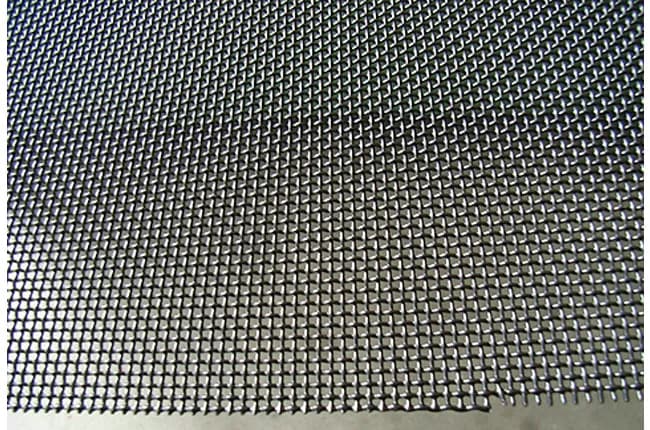
For the record, SCREENGUARD is 316 marine grade stainless steel mesh in T6 grade high tensile extruded aluminium frames, manufactured and finished in Queensland. Our screens are made to measure and manufactured in Cairns. If you're weighing stainless against a patterned grille, the next guide covers that comparison.
Is the mesh 304 or 316?
What are the screws and fixings made of, and is anything separating different metals?
What maintenance does the warranty require, and with what product?
Can you supply the test certificate for the mesh?
Questions we get asked
Will a magnet tell me if my mesh is 316 or 304?
Not reliably. Both grades are generally non-magnetic when annealed, but cold working can make them respond, and ASSDA says cold drawn wire is one of the forms affected. Cold worked wire in either grade can respond, but ASSDA says 316 shows a much lower magnetic response than 304. So a strong pull points away from 316, but no pull doesn't prove it. ASSDA's simple test for telling them apart is a molybdenum spot test, which marks the surface.
Does 316 stainless steel mesh rust?
316 resists ordinary rusting in virtually all architectural uses, ASSDA says, and it's often chosen for sea-front buildings. Even so, ASSDA says tea staining happens wherever local conditions are too aggressive for the grade as installed, so 316 isn't immune. If brown marks do appear, ASSDA says simple polishing is unlikely to remove them and stop them coming back. Chemical cleaning and passivation is usually the most effective treatment, ASSDA says.
Is 316 mesh needed if I live a few kilometres from the beach?
Within about five kilometres of a surf beach, yes: that's where ASSDA sets 316 or an equivalent grade as the minimum. Further back it depends on the house. Wind exposure, heat and shelter can carry staining well inland, while homes around sheltered bays see much less of it. In a humid city like Cairns, it's worth settling the grade at the measure rather than guessing from a map.
Does the frame matter as much as the mesh?
Yes. The frame, screws and fixings sit in the same salty air as the mesh, and the mesh grade says nothing about them. ASSDA warns that aluminium fasteners in stainless steel aren't acceptable, because the aluminium corrodes quickly. Our SCREENGUARD frames are Queensland made T6 aluminium. Whoever you buy from, ask what holds the mesh in the frame and what holds the frame to the house.
What are the downsides of 316 stainless steel mesh?
Cost is one. ASSDA lists 304 among the less expensive grades, so 316 mesh generally costs more. 316 also isn't the top of the stainless range: for splash zones and unwashed spots, ASSDA says duplex or higher grades may be needed. And it still needs a regular rinse near the sea, because ASSDA lists unwashed areas among the spots where even higher grades than 316 may be needed.
Where this comes from
The published sources this guide draws on, and the date each one was checked.