Crimsafe alternatives, and the factors that actually separate them
Updated
The short answer
A Crimsafe alternative is any other tested security screen system: a stainless mesh or perforated aluminium sheet that passes the same security tests in a frame with a proper lock. Alspec's Invisi-Gard, Prowler Proof, Amplimesh and SCREENGUARD all sell one. They differ in mesh grade, how the mesh is held, testing and warranty.
5 sections, a comparison table and 5 questions, about 7 minutes
Our bias, up front: Cairns Security Doors makes SCREENGUARD screens to measure. So this page quotes each maker's own site for its claims, sets the systems side by side on the same factors, and doesn't pick a winner.
A Crimsafe alternative has to be a security screen, not a flyscreen that looks tough. The National Security Screen Association (NSSA) draws that line with a label. Its rule is blunt: if a door isn't labelled, it isn't a security door. A barrier door, the association says, doesn't meet the testing and standards a security door has to pass. So the real shortlist is other tested systems.
On the woven stainless side, that means Invisi-Gard, Prowler Proof's ForceField and Amplimesh's SupaScreen, plus SCREENGUARD, which we make to measure in Cairns. Most of those makers also sell a perforated aluminium or grille range.
One more thing before you compare. Crimsafe isn't a single product. It comes in four levels, Regular, Classic, Ultimate and iQ, and they're built and warranted differently. When a quote says Crimsafe, ask which level it is. Otherwise you can end up weighing one maker's entry level against another maker's top range.
Stainless mesh, perforated aluminium or grille: pick the family first
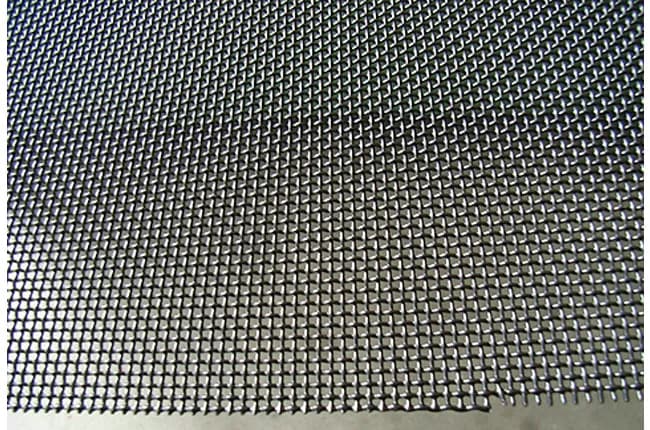
Pick the family before the brand, because the family decides the look, the view and roughly where the price sits. Woven stainless mesh is the Crimsafe family. Crimsafe Regular uses what Crimsafe calls Tensile Tuff 304 structural grade mesh, which it says is 26.5% thicker than typical stainless mesh. Invisi-Gard, ForceField and SupaScreen all use 316 marine grade stainless instead. So does our SCREENGUARD range.
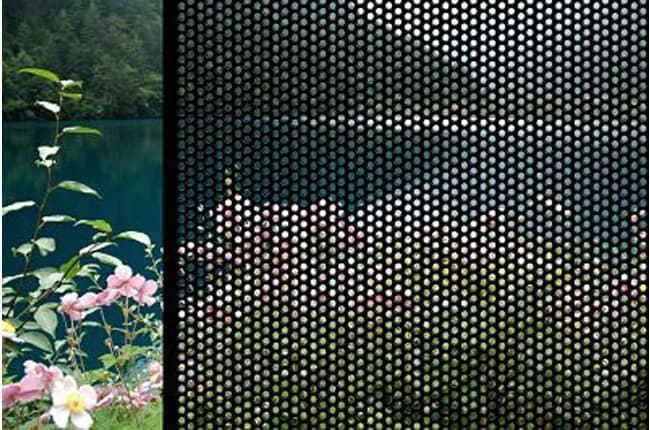
Perforated aluminium is the second family: a solid sheet punched with small holes. Prowler Proof's Protec is a single perforated aluminium sheet. Amplimesh's IntrudaGuard uses 5052 marine-grade aluminium. Our PERFGUARD is a 2 mm sheet, powder coated black, with 40 percent view through.
Grilles are the third. In our own range, Diamond Grille is the cost effective option, a visible diamond pattern rather than a fine mesh. Amplimesh's own comparison table points the same way, with stainless SupaScreen highest on its price scale and Diamond Grille lowest. If budget is the sticking point, look at a different family, not only a different stainless brand.
Mesh fixing, testing and warranty: how the makers differ
Each maker holds the mesh in the frame its own way, and each describes its own method. Crimsafe holds the mesh with its Screw Clamp system, which it says secures the mesh to the frame with a vice-like grip. Invisi-Gard uses a patented EGP retention system that runs around all four sides, with no screws or fasteners. Prowler Proof joins its Meshtec 316 mesh to the frame in what it calls a mechanical and chemical bond, and welds the frame corners. Amplimesh holds SupaScreen with a patented pressure-fit system. The NSSA's own advice is simpler: look for a deep, sturdy receiver channel so the infill can't be pushed out easily.
Testing is the trap. The headline numbers measure different things. Crimsafe quotes a single impact of up to 550 joules for Regular. Invisi-Gard quotes more than 50 impacts of 100 joules each. Amplimesh describes its impact test as five 200 joule hits, and Prowler Proof says ForceField reached Security Level 200. You can't rank those figures against each other. What you can check is whether each product passed the same set of tests, and that's in the test report.
Warranties split the same way, covering different parts for different terms. The table below lines them up.
Five tested stainless mesh systems, as each maker describes them
Factor
Crimsafe Regular
Invisi-Gard
Prowler Proof ForceField
Amplimesh SupaScreen
SCREENGUARD
Mesh
304 stainless, 0.9 mm wire
316 stainless
316 stainless (Meshtec)
316 stainless, high tensile
316 marine grade stainless
Frame and mesh fixing
Screw Clamp
EGP retention on four sides, no screws
Mechanical and chemical bond, welded corners
Pressure-fit, no screws or rivets
T6 high tensile aluminium frame, made in Queensland
Published testing
550 J single impact; jemmy, pull, knife shear
50 x 100 J impacts; knife shear both ways; 2,000 hour salt spray
Near the surf, the grade of stainless matters more than the brand name. The Australian Stainless Steel Development Association (ASSDA) says grade 316, or a grade with equal corrosion resistance, should be the minimum within five kilometres of the surf. It also says lower grades such as 304 will probably tea stain, or corrode worse, in a marine setting. That's general advice about stainless steel, not a test result for any particular screen. Crimsafe makes its own case for 304: thicker wire that it says absorbs impact energy better. Close to the water and keen on Crimsafe Regular? Put ASSDA's advice to the licensee.
Climate counts too. ASSDA says tropical, high humidity areas carry more tea staining risk, and Cairns Aero averages 72 percent relative humidity at 9am across the year. Watch the spots rain never washes, which ASSDA calls particularly susceptible: a patio door under deep eaves, say. Tea staining is cosmetic and doesn't weaken the steel, ASSDA says. Skipping the cleaning can still cost you warranty cover, though. Crimsafe, Invisi-Gard, Amplimesh and SCREENGUARD all tie cover to cleaning, and Invisi-Gard and Amplimesh set a wash every one to two weeks within 500 metres of the sea.
How to compare quotes like for like
Line the quotes up on the same points before you look at the bottom line. A low quote for a barrier door and a higher one for a tested security door aren't the same job, even if they look alike in the brochure. Run every quote through this list, ours included. If a dealer can't answer one of these, that tells you something too.
The compliance label: ask where it sits on the finished screen.
A three point lock as standard. The NSSA says it shouldn't be sold as an add-on.
The tests the NSSA lists: knife shear, jemmy, probe, corrosion, pull and impact. Ask for the report, not a headline number.
How the mesh is held, and how deep the receiver channel is.
Mesh grade, 304 or 316, measured against how far the house is from the surf.
What the warranty leaves out. Crimsafe's excludes locks, handles, rollers, hinges and door closers unless its table lists them, and Invisi-Gard leaves locks to the lock maker's warranty.
Who the warranty belongs to. Prowler Proof's stays with the screen for new owners, while Crimsafe's and Invisi-Gard's cover the original buyer only.
The cleaning you'll need to do to keep the warranty valid.
Questions we get asked
Is there a cheaper alternative to Crimsafe?
Often, by changing family rather than brand. Perforated aluminium and diamond grilles sit lower on Amplimesh's own price scale than its stainless SupaScreen, and Diamond Grille is the cost effective option in our range. Within stainless mesh, Crimsafe itself sells four levels and describes Regular as an affordable and practical security solution. So before you compare totals, check you're comparing the same family and the same level, with the same lock and the same tests behind it.
Is Invisi-Gard as good as Crimsafe?
There's no fair yes or no, because the two makers publish impact results measured in different ways. They're also built differently. Invisi-Gard uses 316 stainless held by its EGP system with no screws, while Crimsafe Regular uses thicker 304 wire held by Screw Clamp. Invisi-Gard covers its mesh for life on homes, and Crimsafe gives 10 years as standard. Near the surf, weigh the mesh grade first.
What tests should a security screen pass?
A security screen should pass knife shear, jemmy, probe, corrosion, pull and impact testing, the set the National Security Screen Association lists for compliant screens, and it should carry a compliance label. Ask for the test report for the exact product and level on your quote. Makers report impact results in different ways, from one hard hit to dozens of lighter ones, so the report is the only fair comparison.
Which security mesh suits a house near the beach in Cairns?
Start with 316 marine grade stainless or a perforated aluminium sheet. ASSDA advises grade 316 as a minimum for stainless within five kilometres of the surf, and the NSSA tells coastal buyers to weigh corrosion resistance. Prowler Proof pitches its perforated Protec at seaside homes. Whichever you choose, plan on frequent washing, because Amplimesh suggests every one to two weeks within 500 metres of the ocean.
Which is stronger, Crimsafe or Prowler Proof?
Both claim the top spot, so the claims cancel out. Crimsafe calls itself home of Australia's strongest security screens, and Prowler Proof says its screens are the strongest performing. Crimsafe quotes a 550 joule single impact for Regular, while Prowler Proof states ForceField reached Security Level 200. Those are different measures. Ask each dealer for the full test report and check both products passed the same tests.
Where this comes from
The published sources this guide draws on, and the date each one was checked.