Fly screen, barrier screen or security screen: the differences
Updated
The short answer
A fly screen keeps insects out, and that's its whole job. A security screen has to keep insects and people out, and it's built to withstand knife shear, jemmy, probe, corrosion, pull and impact tests, with a label to prove it. In between sits the barrier or safety screen, which the NSSA says won't pass that testing.
5 sections, a comparison table and 5 questions, about 7 minutes
This guide sets the three side by side by mesh, frame and locks. It answers whether you can drop security mesh into an old fly screen frame, and it sorts out which openings on a Cairns house need which screen.
All three are usually an aluminium frame holding an infill you can see through. What separates them is the job each one was built to do.
A fly screen is an insect screen. Amplimesh, a security screen maker, describes standard fly screens as an aluminium frame holding fibreglass, PVC coated polyester or a tighter midge mesh, and says plainly they aren't security screens. Our own flyscreens use fibreglass, which is soft, flexible and won't rust, rot or corrode. On its own, though, fibreglass only stops bugs.
A barrier screen is the middle tier, and it's the one that causes confusion. The National Security Screen Association (NSSA) says the name describes a screen that won't pass the Australian Standard testing, and that the same products also get sold as safety screens. It says a barrier door lacks the necessary strength and durability to provide reliable protection.
A security screen is the tested one. The NSSA defines it as a physical barrier to entry that lets air through while keeping insects and intruders out.
Mesh, frame and locks compared
The mesh, the frame and the locks are where a security screen earns its name, and the NSSA spells out what buyers should look for in each.
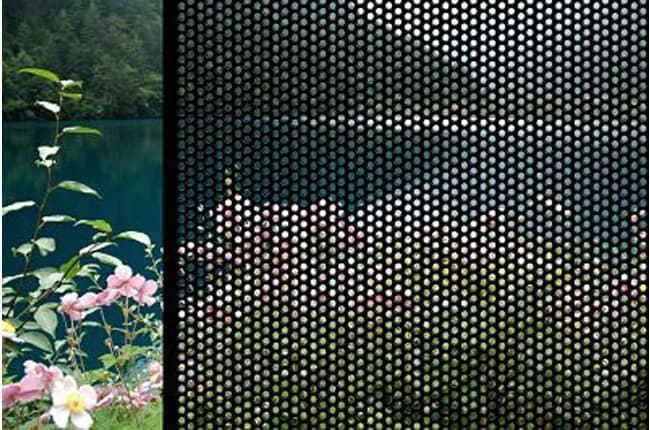
Mesh first. The NSSA lists the infill a security door can use: steel grilles or decorative panels, aluminium grille, perforated aluminium sheet and stainless steel mesh. Fibreglass and polyester aren't on that list. Our SCREENGUARD range uses woven 316 marine grade stainless, and PERFGUARD uses a 2 mm perforated aluminium sheet, powder coated black.
Then the frame. A security frame should have a deep, sturdy receiver channel so the infill can't be pushed out easily, plus corners reinforced with internal corner stakes or fully welded joints. SCREENGUARD frames are T6 grade high tensile extruded aluminium, made and finished in Queensland.
Locks and hinges finish the job. The NSSA treats a three point lock as standard on a compliant security door, with a 5-pin key cylinder as the minimum and at least three fixed-pin hinges. Fly screens carry none of these requirements. They sit outside security standards altogether.
Fly screen, barrier screen and security screen compared
Factor
Fly screen
Barrier or safety screen
Security screen
Main job
Keeping flies and insects out
Sold as a lower tier screen that won't pass the standard's testing
Keeping insects and intruders out while letting air through
Typical infill
Fibreglass, PVC coated polyester or midge mesh
Varies by maker
Steel or aluminium grille, perforated aluminium sheet or stainless steel mesh
Frame
Aluminium, built to hold insect mesh
Varies by maker
Deep receiver channel, corners staked or fully welded
Locks and hinges
No security requirement
No tested requirement
On doors: three point lock, 5-pin cylinder minimum, at least three fixed-pin hinges
Testing
Not covered by security standards
Won't pass the Australian Standard testing
Knife shear, jemmy, probe, corrosion, pull and impact
Compliance label
None
None
Required on products from NSSA members
Keeps insects out
Yes, while the mesh is intact
Depends on the infill
Yes with mesh or perforated sheet; a grille needs mesh behind it
Fly screen, barrier screen and security screen compared
Main job
Fly screenKeeping flies and insects out
Barrier or safety screenSold as a lower tier screen that won't pass the standard's testing
Security screenKeeping insects and intruders out while letting air through
Typical infill
Fly screenFibreglass, PVC coated polyester or midge mesh
Barrier or safety screenVaries by maker
Security screenSteel or aluminium grille, perforated aluminium sheet or stainless steel mesh
Frame
Fly screenAluminium, built to hold insect mesh
Barrier or safety screenVaries by maker
Security screenDeep receiver channel, corners staked or fully welded
Locks and hinges
Fly screenNo security requirement
Barrier or safety screenNo tested requirement
Security screenOn doors: three point lock, 5-pin cylinder minimum, at least three fixed-pin hinges
Testing
Fly screenNot covered by security standards
Barrier or safety screenWon't pass the Australian Standard testing
Security screenKnife shear, jemmy, probe, corrosion, pull and impact
Compliance label
Fly screenNone
Barrier or safety screenNone
Security screenRequired on products from NSSA members
Keeps insects out
Fly screenYes, while the mesh is intact
Barrier or safety screenDepends on the infill
Security screenYes with mesh or perforated sheet; a grille needs mesh behind it
Testing is what makes a screen a security screen
Testing is the line between a security screen and everything else. How solid a screen looks isn't the test; the NSSA's measure is passing the Australian Standard testing and carrying a compliance label. The NSSA lists what a properly installed security screen is designed to withstand: knife shear, jemmy, probe, corrosion, pull and impact.
Prowler Proof, another manufacturer, says on its own site that the Australian Standard test is six separate tests that all have to be passed by the same test sample. That detail matters. A screen that survives the knife and then lets go under the pull hasn't passed.
On our side, SCREENGUARD states its stainless mesh screens pass impact, knife shear, jemmy, pull and probe tests.
The proof you can check at home is the compliance label. NSSA members have to label every security screen product that meets the standard, and the association keeps its rule short: if it isn't labelled, it isn't a security door. Our security doors page covers what the label should show, so it's worth reading before you compare quotes.
Security mesh in a fly screen frame won't make a security screen
Fitting stainless or security mesh into an old fly screen frame still gives you an insect screen. It doesn't give you a security screen, because the mesh is only one part of what gets tested.
A fly screen frame was built to hold an insect mesh, and nothing about it has been tested for security. A security frame needs a deep receiver channel and reinforced corners so the infill can't be pushed out. Amplimesh says it assembles its screens with a patented process that keeps the mesh panel's structural integrity. Then there's the three point lock and the fixed-pin hinges the NSSA expects on a security door, which aren't a requirement for a fly screen.
The NSSA adds a warning. Compliant screens are made and installed to very tight tolerances with specialised fixings, and a screen you can put up and make work may still not give proper security.
So there are two real options. If the fly screen keeps tearing because the dog leans on it, swap the fibreglass for pet mesh, a thicker fibreglass that gives a little instead of tearing and fits wherever standard fibreglass goes. If you want security, replace the whole unit with a tested screen made to measure for that opening.
Which openings need which screen
The opening decides the screen. For each one, ask: does it need to stop insects only, or insects and people?
Queensland Health's advice for anyone living in a place with dengue is to screen living and sleeping areas. It notes that towns in north and central Queensland with the dengue mosquito are prone to outbreaks when travellers bring the virus in, and that these mosquitoes bite quietly during the day. Ross River virus cases in northern Queensland turn up all year, with most between February and May. A fly screen does that job. So does a security screen with a fine infill, since woven wire mesh and perforated sheet both keep insects out.
Diamond Grille is the exception worth knowing. The grille on its own won't keep insects out, so our Diamond Grille screens come with fibreglass mesh behind the grille as standard.
Security matters most where an opening is reachable from outside and you want it open: the front door left open for the breeze, or the sliding patio door after dark. That's where a labelled screen with a three point lock earns its place. If a bedroom window could be a way out in an emergency, our range of mesh page covers how that changes the choice.
Questions we get asked
Can I swap the mesh in my fly screen for security mesh?
You can change the mesh, but the result is still a fly screen. The NSSA says the term security door only applies when the door can be shown to meet the Australian Standard, and the door's compliance label covers materials, construction and the locking system, not the infill alone. If torn mesh is the real problem, pet mesh is the practical swap in the frame you already have. If security is the goal, the whole screen gets replaced.
Does a security screen keep insects out as well as a fly screen?
Yes, as long as it has a fine infill. Woven stainless and perforated aluminium are small aperture infills, so insects can't get through. Amplimesh, for example, gives its SupaScreen mesh holes as 1.6 mm by 1.6 mm. A Diamond Grille has bigger gaps, which is why our grille screens carry fibreglass mesh behind the grille as standard to handle the insects.
How can I tell if my screen door is a security door?
Check four things before you trust it. Start with a compliance label, because the NSSA's position is that an unlabelled door isn't a security door. Next, count the locking points on the edge: three is standard. Then look for at least three fixed-pin hinges and a 5-pin key cylinder. A door missing these is most likely a barrier screen, however solid it feels.
Is a barrier screen the same thing as a safety screen?
Yes, the trade uses both names for the same tier. The NSSA says barrier door describes a screen that won't pass the Australian Standard testing, and that these products can also be sold as safety screens. Since they haven't passed, they won't carry a compliance label. If you're quoted a safety door, ask whether it's labelled to the standard before you compare prices.
Do Cairns homes need security screens on every window?
Not necessarily. It comes down to each opening. Queensland Health advises screening living and sleeping areas against dengue mosquitoes, so those windows need insect cover. Security screens make most sense on doors and windows people can reach from outside and that you like to leave open. Because every screen we make is made to measure in Cairns, each opening can get the type it needs.
Where this comes from
The published sources this guide draws on, and the date each one was checked.