Diamond grille or stainless steel mesh: what you gain and give up
Updated
The short answer
In our range, Diamond Grille is the cost effective pick: a diamond pattern, with fibreglass mesh fitted behind it because the grille alone won't stop insects. Woven 316 stainless mesh keeps the view clear, and as a small aperture infill it stops most insects without a second layer. Either can be a security door if that exact product is tested and labelled.
6 sections, a comparison table and 4 questions, about 8 minutes
This guide puts the two side by side on the things you'll actually live with: what you see through the door, whether the bugs stay out, what each one is tested to resist, and how each copes with salt air on the Cairns coast. No winner here. Just the trade-off, so you can pick per opening.
The difference in one paragraph: a pattern versus a weave
A diamond grille door uses an open diamond pattern as its security layer, while a stainless mesh door uses a fine woven mesh. Everything else in this guide follows from that one split. In our range, Diamond Grille is the cost effective option, a visible pattern rather than a fine mesh, and SCREENGUARD is the woven 316 marine grade stainless.
The big openings in a grille mean a Diamond Grille door needs a second layer to stop insects, so ours come with fibreglass mesh behind the grille as standard. A stainless mesh door doesn't need that second layer for most insects. The weave that takes the knocks is the same weave that stops most insects.
The National Security Screen Association (NSSA) lists aluminium grille and stainless steel mesh among the infills a security door can use, so both are recognised types. What turns either one into a security door is the testing behind the actual product. That's covered further down, after the table.
Diamond grille and woven stainless mesh compared, factor by factor
Factor
Diamond grille
Woven 316 stainless mesh
Security layer
The diamond grille itself
The woven mesh itself
View out
A visible pattern, looked through with a fibreglass mesh behind it
Clear, one fine layer
Insects
Needs fibreglass mesh behind the grille (standard on ours)
The same weave stops most insects
Aperture class in the standard
Medium: must stop an arm
Small: stops a 3 mm probe
Proof it's a security door
Compliance label and test certificate for that product
Compliance label and test certificate for that product
Salt air
Follow the maker's coastal care routine
316 is ASSDA's minimum within 5 km of the surf
Where it sits in our range
The cost effective option
SCREENGUARD, chosen where the view matters
Diamond grille and woven stainless mesh compared, factor by factor
Security layer
Diamond grilleThe diamond grille itself
Woven 316 stainless meshThe woven mesh itself
View out
Diamond grilleA visible pattern, looked through with a fibreglass mesh behind it
Woven 316 stainless meshClear, one fine layer
Insects
Diamond grilleNeeds fibreglass mesh behind the grille (standard on ours)
Woven 316 stainless meshThe same weave stops most insects
Aperture class in the standard
Diamond grilleMedium: must stop an arm
Woven 316 stainless meshSmall: stops a 3 mm probe
Proof it's a security door
Diamond grilleCompliance label and test certificate for that product
Woven 316 stainless meshCompliance label and test certificate for that product
Salt air
Diamond grilleFollow the maker's coastal care routine
Woven 316 stainless mesh316 is ASSDA's minimum within 5 km of the surf
Where it sits in our range
Diamond grilleThe cost effective option
Woven 316 stainless meshSCREENGUARD, chosen where the view matters
View, light and airflow: stainless keeps the outlook, the grille frames it
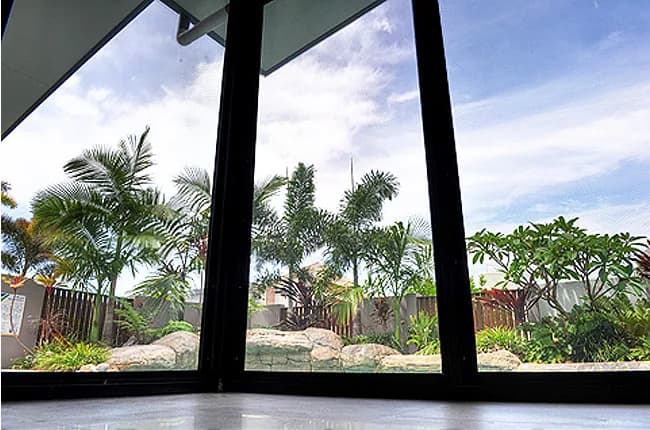
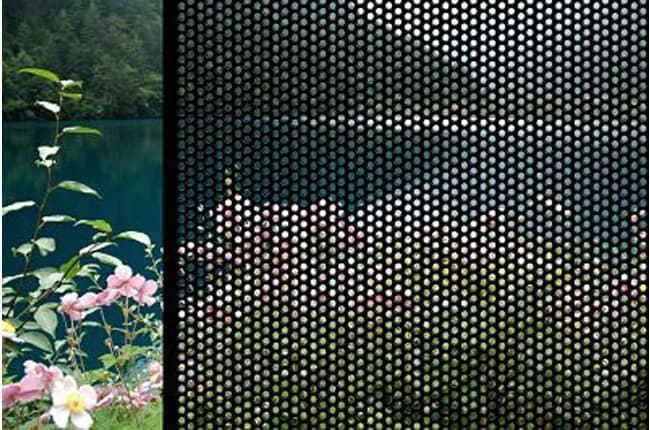
Woven stainless gives the clearer view: the weave is fine enough that your eye reads the outlook, not the mesh. A diamond grille puts a bold pattern across the doorway, and you'll see that pattern every time you look out. Some people like that look, and Prowler Proof, a maker of diamond designs, says its black grille is more transparent and blends in better with the look of most homes.
Light and view go together. On a grille door you're looking through two layers, the grille and the fibreglass behind it. On a stainless door you're looking through one.
If airflow is your main reason for a screen, ask to see both at the measure and stand in front of each one. Your own eyes and skin are the fairest test.
Insects: a grille needs a second mesh to do the job
A diamond grille on its own won't keep insects out, because its openings are sized to stop an arm, not a mosquito. The Australian Standard for security screens puts diamond screens in its medium aperture class, which has to stop an arm getting through. Woven wire mesh is in the small aperture class, tested so that a 3 mm probe can't pass.
That's why the second mesh matters so much on a grille door. Ours use fibreglass behind the grille as standard, and fibreglass won't rust, rot or corrode. Be clear about what that layer is, though. The fibreglass is there for insects only. In a Diamond Grille door, the grille carries all of the security work. Prowler Proof, for one, lists an aluminium grille with fibreglass gauze as standard.
Want privacy too? The grille can be paired with DVA one way vision mesh instead of plain fibreglass. DVA isn't a security product itself, so it always sits with the grille rather than replacing it, and it's worth asking us how insects are handled on that combination. With woven stainless, the one layer does both jobs for most insects.
Security: either can pass testing, so check the label, not the look
Either design can be a tested security product, so the pattern alone tells you very little. The NSSA says the term security door can only be used if the door can be shown to meet the Australian Standards. It puts it plainly, too: if it isn't labelled, it isn't a security door. A barrier door, by contrast, doesn't meet that testing.
For stainless, SCREENGUARD states every one of its security screen doors is tested against the Australian Standards, and that its range goes beyond the standard's impact test. For grilles, the results belong to each maker. Prowler Proof, for example, states its diamond designs passed the Australian Standard for security up to Security Level 100. That's one brand talking about its own product. It isn't a rule that covers every grille on the market.
The infill is only part of the story. No security screen is intruder-proof. The result rests on four things working together: the infill, the fixings into the building, the lock, and the frame it hangs in. NSSA's buying guide says a 3 point lock comes standard with a compliant security door and shouldn't be considered an add on. Whichever infill you choose, ask for the compliance label and the test certificate for that exact product.
Salt air and upkeep: 316 stainless suits the coast, but neither is wash-free
Near the sea, 316 stainless is the grade the industry points to. The Australian Stainless Steel Development Association (ASSDA) says grade 316, or one with equivalent corrosion resistance, should be the minimum within five kilometres of the surf. The NSSA tells coastal buyers that marine grade 316 mesh is designed to prevent rust.
ASSDA also flags tropical, high humidity areas as more at risk of tea staining, the brown discolouration stainless can pick up on the coast. Cairns averages 72 percent humidity at 9am, so that warning applies here. Tea staining is cosmetic, though, and ASSDA says it doesn't affect the strength or lifetime of the material.
Stainless still needs a wash. ASSDA notes that sheltered spots the rain doesn't wash are particularly prone to staining. ASSDA's advice is a light, regular wash: natural rain may be enough, and if it isn't, wash the stainless when you wash an adjacent window. Never use hydrochloric acid on stainless.
Warranties can hang on that routine. Regular maintenance with SCREENGUARD Powawash is a condition of the 10 year SCREENGUARD warranty. Grilles have care terms of their own, set by each maker, so ask whoever quotes your grille for their written care and warranty terms.
Which one suits which opening: view leans stainless, budget leans grille
Choose stainless where the outlook matters most, and a grille where budget leads and you don't mind looking through a pattern. Near the surf, any stainless you choose should be 316 or better. You don't have to pick one material for the whole house, either. Every door and screen is made to measure and manufactured in Cairns, so each opening can be priced on its own terms.
Here's how that tends to play out across a typical house:
A front or patio door that faces the view: woven stainless keeps the outlook clear, with one layer to look through instead of two.
Any stainless within five kilometres of the surf: make it 316, the minimum ASSDA sets for that distance.
A side door or laundry where cost matters more than the view: Diamond Grille, our cost effective range, with fibreglass behind it for insects.
A bathroom or bedroom window facing a neighbour: a grille paired with DVA one way vision mesh, so the grille does the security and the DVA does the privacy.
An older door you're not ready to replace: we repair locks, wheels and tracks onsite, which can buy time before you choose.
Questions we get asked
Is a diamond grille door a real security door?
It can be, provided that exact product has been tested and carries a compliance label. The pattern doesn't decide it. A grille door sold as a barrier or safety door hasn't passed the security testing, even if it looks much the same. Before you buy, find the label and ask the supplier for the test certificate, so you know what you're paying for.
Does a diamond grille keep insects out?
No, not by itself. The diamond openings are sized to stop a person's arm, so flies and mosquitoes go straight through a bare grille. The mesh fitted behind it is what keeps them out. Our Diamond Grille screens come with fibreglass mesh behind the grille as standard. If you'd like privacy as well, the grille can be paired with DVA one way vision mesh instead. DVA is a privacy layer, not part of the security, so ask us how insects are handled on that combination.
Which lasts longer near the sea, diamond grille or stainless mesh?
There's no single answer, because life near the sea depends on the material, how the screen is built and how often it's cleaned. For stainless, insist on at least 316 grade if you're within five kilometres of the surf. For a grille, the maker's care instructions are your guide. Either way, get the warranty and its maintenance conditions in writing, since some warranties depend on regular washing.
Can I change a diamond grille door to stainless mesh later?
Plan for a new screen rather than a swap. How secure a screen is depends on the infill, the frame, the fixing and the lock working together, so pulling a grille out and fitting different mesh isn't a job to try at home. Each screen we make is built to measure, so a stainless door can be made for the same opening. Until then, the old door's lock, wheels or track can still be repaired.
Where this comes from
The published sources this guide draws on, and the date each one was checked.
Crimsafe alternatives compared on mesh, frame fixing, testing, warranty and salt air, using each maker's own published claims. Written for coastal Cairns homes.
5 sections, a comparison table and 5 questions, about 7 minutes