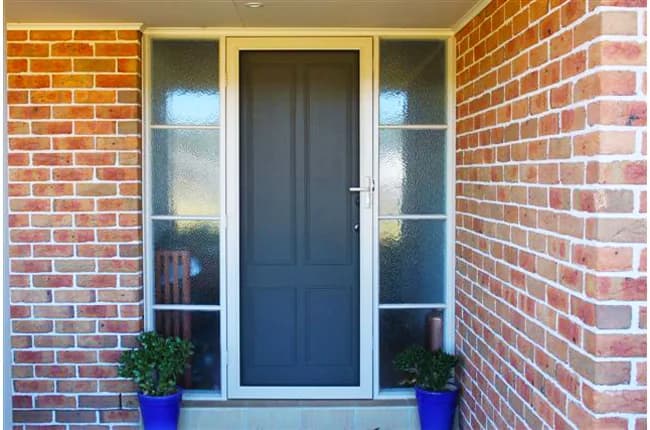
How to measure a doorway for a security screen door
Updated
The short answer
Measure the opening, not the old door. Take the width at the top, centre and bottom, the height at both sides and the centre, and note the depth of the reveal and anything in the swing path. Write every figure in millimetres. Keep the smallest height, and the smallest reading at the top and at the bottom. For a made-to-measure security door, those numbers are for planning and comparing quotes: ScreenGuard says there's no fixed size range for its security screen doors, and every one is built to the exact dimensions of the opening.
8 sections, a comparison table and 6 questions, about 10 minutes
That matters in Cairns, where older houses are rarely square and a stock size leaves gaps. This guide covers what to measure, how your own figures show an opening is out of square, where the common door sizes come from, and what we check when we come out to measure.
Measure the hole in the wall, jamb to jamb and sill to head, not the door hanging in it. A door is smaller than the frame around it. Corinthian Doors, an Australian door maker, lists a 2040 by 820 mm entrance door in a single frame of 2100 by 866 mm on its frame table. So a door size, a frame size and an opening size are three different numbers, and only the opening tells you what a security screen has to fill.
An old screen door is a poor guide for the same reason. It may have been a stock size packed out to fit, or the frame may have moved since it went in. Take fresh measurements of the opening as it is today.
There's one more step for a security door. The figure a door is built to is a make size, which is the opening less a set of deductions. One DIY supplier's measure guide says its factory builds to the make size you send and does no deductions, so the buyer has to take them off and get them right. On a made-to-measure job, the fabricator who measures the opening does that work.
Width, height and square: the three checks
Take three widths and three heights, then compare them. The steps below follow the hinged door measure guide from OnlineSecurityScreens.com.au, a supplier of DIY security doors. It's a useful way to record an opening even if you never order a kit. Use a good steel tape and record millimetres.
If the readings don't match, the opening is out of square, and that's common. ScreenGuard says very few homes have perfectly standard, square openings, and that out-of-square or non-standard openings need made-to-measure fabrication rather than stock sizing.
Width at the top: measure jamb to jamb at the head of the opening, then again 150 mm down.
Width at the centre: measure jamb to jamb halfway up the opening.
Width at the bottom: measure jamb to jamb at the sill, then again 150 mm up.
Height in three places: measure sill to head on the hinge side, the lock side and the centre.
Keep the smallest height, and the smallest reading at the top and at the bottom. A door sized to the largest figure won't fit where the opening is tightest.
Compare the widths. That guide allows no more than 7 mm between its top and centre widths, or its bottom and centre widths. Any spread means the jambs aren't quite parallel, and past 7 mm that guide's door won't suit the opening.
What to write down for each opening before you ask for quotes
What to record
How to take it
Why it matters
Widths
Top, centre and bottom, jamb to jamb
The tightest reading limits the size; the spread shows whether the jambs are parallel
Heights
Hinge side, lock side and centre, sill to head
A sloping sill or head shows up as different readings
Reveal depth
Depth of jamb in front of the closed timber door
Decides how a hinged screen mounts and what packing it needs
Handle clearance
Straight edge across the jamb, then to the timber door and its handle
The screen's handle and lock have to clear the door behind
Swing path
Look along the arc a hinged screen will travel
Lights, awnings, walls, stairs and uneven ground can block it
Lock side and height
Stand outside, pick left or right, note the existing handle height
Sets where the screen's lock sits
Slider track
Note the track the glass door runs on
ScreenGuard sets sliders up for narrow or wide tracks
What to write down for each opening before you ask for quotes
Widths
How to take itTop, centre and bottom, jamb to jamb
Why it mattersThe tightest reading limits the size; the spread shows whether the jambs are parallel
Heights
How to take itHinge side, lock side and centre, sill to head
Why it mattersA sloping sill or head shows up as different readings
Reveal depth
How to take itDepth of jamb in front of the closed timber door
Why it mattersDecides how a hinged screen mounts and what packing it needs
Handle clearance
How to take itStraight edge across the jamb, then to the timber door and its handle
Why it mattersThe screen's handle and lock have to clear the door behind
Swing path
How to take itLook along the arc a hinged screen will travel
Why it mattersLights, awnings, walls, stairs and uneven ground can block it
Lock side and height
How to take itStand outside, pick left or right, note the existing handle height
Why it mattersSets where the screen's lock sits
Slider track
How to take itNote the track the glass door runs on
Why it mattersScreenGuard sets sliders up for narrow or wide tracks
Reveal depth and where the screen will sit
The reveal is the depth of jamb in front of your closed timber door, and it decides how a hinged security door mounts. In the OnlineSecurityScreens guide, the security door swings out, hung on the outside of the jamb. It needs somewhere to sit and enough room in front of the timber door for both handles.
That guide sets out the numbers for its own door. It needs a reveal of 20 mm or more, or no reveal at all. From 23 to 26 mm it adds adhesive mohair; from 27 to 35 mm it adds hinge packers, adhesive mohair and an extended striker; past 35 mm, or with no reveal, it uses a stop bead. It also checks the gap from a straight edge across the jamb to the timber door: a minimum of 53 mm, with 56 mm or more recommended, so the screen's handle clears the door behind it.
Those figures belong to that product. Other hardware has other numbers. ScreenGuard says that because every door is fabricated for a specific opening, the only accurate quote is one based on your actual doors and windows.
Standard door sizes exist, but made-to-measure security screens are built to the opening
Entrance doors come in standard sizes. The security screen doors we build don't. Corinthian Doors lists its single entrance frames for doors 2040 or 2340 mm high and 820, 870 or 920 mm wide. Those are door sizes, though, and Corinthian also says it can tailor-make entrance frames for any size opening.
On the screen side, ScreenGuard says there's no fixed size range. Every ScreenGuard door is custom-built to the exact dimensions of the opening, and measured, fabricated and installed by a licensed local supplier rather than cut down from a standard size.
So a common door size tells you roughly what to expect, and not much else. Your opening may not match any catalogue, and ScreenGuard says very few homes have perfectly standard, square openings, especially older homes. Every door and screen we supply is made to measure in Cairns rather than supplied in a stock size, so the figure that counts is the one taken at your house.
Hinged or sliding: what changes in the measure
Each door type adds its own checks to the measure. ScreenGuard says sliding doors suit patios and balconies where a swinging door isn't practical, and hinged doors suit single front, side or back entrances. Before you measure, note which type each opening needs. Not sure which type suits a doorway? Our guide to hinged vs sliding security doors matches a type to each opening.
Hinged: walk the swing path. The OnlineSecurityScreens guide lists lights, awnings, walls, stairs and uneven ground or concrete as things to note.
Hinged: stand outside and choose the lock side, left or right. That guide sets the screen's lock height from the handle on the existing timber door.
Hinged: check how the existing door hangs. That guide's kit suits a timber door hinged on its edge, not a pivot door.
Sliding: note the track the glass door runs on. ScreenGuard sets its sliders up with rollers for narrow or wide tracks.
Sliding: note the full opening the slider will cover; we measure it on site the same way we measure every opening.
What happens at a made-to-measure visit
At a made-to-measure visit, we take the measurements ourselves, so your own figures are for planning and comparing quotes. We measure every opening on site. Older Cairns houses are rarely square, and a stock size leaves gaps, so the door is built in Cairns to the figures taken at your house, in whichever of our four ranges you choose: SCREENGUARD 316 marine grade stainless mesh, PERFGUARD perforated mesh, Diamond Grille or Colonial Casting. Then we come back and fit it. There's no showroom, so the measure is where the job starts.
The visit also shows up anything that changes the job. ScreenGuard's cost guide says a square opening in good condition is quicker and more affordable to fit than one needing old frames repaired or reinforced, existing screens or grilles removed, or a sill extended. If an opening needs any of that, it belongs on the quote, not on install day.
Keep your own numbers handy anyway. Two quotes measured from the same opening should land on similar sizes. If one is well off the other, ask why.
Measure it yourself, but leave the build and fit to a licensed installer
Measuring is a safe job for a homeowner. Building and fitting one is a different matter: the NSSA advises against doing it yourself. The National Security Screen Association (NSSA) says compliant security screen doors are made and installed to very tight tolerances with specialised fixings, and that while you may get a screen up and working, it may not provide proper security. It also says that in many states security screen installers need to be licensed. In Queensland, the QBCC lists fabricating and installing security screens and doors in the scope of work for its glass, glazing and aluminium licence.
ScreenGuard takes the same line: its doors aren't a DIY kit, and each one is custom-measured and installed by a licensed fabricator for fit, weather sealing and warranty coverage.
That's also why cutting a security door down isn't the fix for a door that's too big. ScreenGuard builds to the measured opening rather than cutting down a standard size. We work under QBCC licence 1199847, published so you can check it on the public register before you book.
What size is a standard security screen door in Australia?
There isn't a single one. ScreenGuard says there's no fixed size range for its security screen doors: each is custom-built to the exact dimensions of the opening. The common sizes in catalogues like Corinthian's belong to entrance doors, and a stock security door sold in a fixed size may not suit an out-of-square opening. Corinthian Doors lists entrance doors at 2040 or 2340 mm high and 820, 870 or 920 mm wide. A security door covers the opening around that door, so measure the opening rather than looking up a size.
Do I measure the door or the opening?
Measure the opening, jamb to jamb and sill to head. A door is smaller than its frame: Corinthian lists a 2040 by 820 mm entrance door in a 2100 by 866 mm frame. An old screen door is a poor guide too, because it may have been packed out to fit or the frame may have moved since. Take three widths and three heights. Keep the smallest height, and the smallest reading at the top and at the bottom.
What if my doorway is not square?
Then a door made to that opening is the surest fit. ScreenGuard says very few homes have perfectly standard, square openings, and that out-of-square ones need made-to-measure fabrication rather than stock sizing. You'll see it in your own figures when the three widths or three heights don't match. Every door and screen we supply is made to measure in Cairns, built to the readings taken at your house.
Can a security door be cut down to fit?
That isn't how a security door is meant to be sized. ScreenGuard says its doors are measured, fabricated and installed for the opening, not cut down from a standard size. The NSSA says compliant security doors are made and installed to very tight tolerances with specialised fixings, and that a screen can go up and operate without giving proper security. If a door is too big, the answer is one built to the measured size.
Do I need a licensed installer, or can I fit a security door myself?
Measure it yourself if you like, but leave the build and fit to a licensed installer. The NSSA recommends against DIY and says that in many states security screen installers need to be licensed, and in Queensland the QBCC includes fabricating and installing security screens and doors in its glass, glazing and aluminium licence. ScreenGuard's doors aren't a DIY kit: each one is custom-measured and installed by a licensed fabricator for fit, weather sealing and warranty coverage. We work under QBCC licence 1199847, which you can check on the public register.
Will you measure my doors in Cairns?
Yes. Every job starts with a measure at the house, since there's no showroom to visit. We measure each opening on site, build the door in Cairns to those figures, then come back and fit it. Send the openings you want covered through the quote form on our contact page, or give us a call, and tell us which are hinged doors and which are sliders.
Where this comes from
The published sources this guide draws on, and the date each one was checked.