Steel or aluminium security door: which suits a coastal home
Updated
The short answer
Neither metal wins on its own. A steel security door and an aluminium one can both do the job, and the National Security Screen Association (NSSA) points buyers to testing and a compliance label rather than to a metal. Near the sea, the bigger difference is rust. Painted steel rusts once the paint is breached; galvanised steel keeps some protection at a scratch. Aluminium doesn't rust, though it can still corrode in harsh conditions.
8 sections, a comparison table and 5 questions, about 9 minutes
This guide separates the frame from the infill, compares steel and aluminium on weight, coatings and salt air, and ends with the questions to put to a supplier. It draws on published guidance from the NSSA, the Galvanizers Association of Australia, the Australian Aluminium Council and the Australian Stainless Steel Development Association.
The short answer: choose the tested door, then the metal for your site
A tested, labelled security door is the safer buy, whatever metal its frame is made from. The NSSA's FAQ points buyers to a door that has passed testing to the Australian Standard and is fitted with a compliance label. It says that label shows the product meets specific requirements for materials, construction and locking system. So the metal is only one of the things the label covers.
Once that box is ticked, the metal choice comes down to where the door lives. Aluminium is lighter and doesn't rust. Steel relies on its coating. Paint keeps it rust free only until the paint is breached, while galvanising keeps protecting the steel where the coating is damaged. On a house near salt water, the coating is the part to question.
The table further down sets the two metals side by side, factor by factor. It doesn't name a winner, because the right answer changes with the house, the exposure and the door itself.
Frame and infill are two separate choices
A security door has two metal parts, the frame around the edge and the infill in the middle, and they don't have to match. The NSSA lists four infill types: steel, as decorative work or grilles; aluminium grille; aluminium perforated sheet; and stainless steel mesh. So a door described as steel might mean a steel frame, a steel grille, or stainless steel mesh held in an aluminium frame. Those are quite different products.
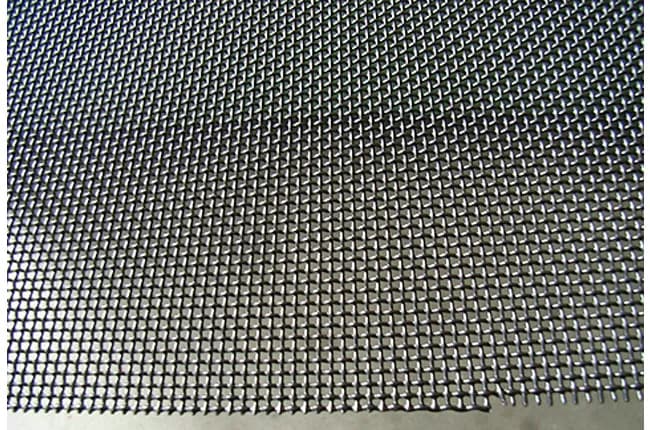
That last combination is how SCREENGUARD, the woven mesh range we build in, is made: 316 marine grade stainless steel mesh in T6 grade high tensile extruded aluminium frames, manufactured and finished in Queensland. Our range of mesh page compares the infill options one by one.
Whatever the metal, the NSSA sets out what a sound frame looks like. It should have a deep, sturdy receiver channel so the infill can't easily be pushed out, with a strong connection to the main frame. Its corners should be reinforced with internal corner stakes or fully welded joints.
Steel doors: only as rust free as the coating
Plain steel rusts when it stays wet, so a steel security door is only as rust free as the coating on it. The Galvanizers Association of Australia (GAA) explains that corrosion turns metallic iron into rust, and that it needs moisture on the surface, such as condensation, rain or ponding water.
Paint holds rust off only while it's intact. The GAA says conventional barrier protection such as painting won't prevent corrosion once the base steel is exposed by impact damage or abrasion. On a door, a chip or a deep scratch is enough to expose it.
Galvanising works differently. The GAA says that where a galvanised coating is damaged, the surrounding zinc keeps protecting the steel through cathodic action. It also says the galvanised coating corrodes at between one seventeenth and one eightieth the rate of steel, depending on the environment. The protective layer on the zinc regenerates after damage by slowly consuming the zinc, so the coating is used up over time. On any steel door, ask whether it's galvanised as well as painted.
Aluminium frames: lighter, and they don't rust
Aluminium doesn't rust, and it's much lighter than steel. The Australian Aluminium Council says aluminium can weigh only a third as much as a piece of steel the same size and shape. It forms a natural film of aluminium oxide on contact with air, and the council says that film reforms straight away if it's scratched.
Strength is the usual worry, and it's a question about the frame rather than the metal. What matters on your door is how the frame is made and tested, which the testing section below covers.
Aluminium isn't immune to salt air. The council says it corrodes only under certain conditions, and that in adverse weather or environmental conditions its corrosion pattern is more complex. Be careful with the phrase marine grade, too. The council says it originally referred to 5000 series alloys such as 5052 and 5251 used for small boats, so ask what alloy a frame actually is.
Steel and aluminium security door frames compared (testing and the compliance label apply to both)
Factor
Steel frame
Aluminium frame
Rust
Painted steel rusts where the paint is breached; galvanising slows this
Doesn't rust, but can corrode in adverse conditions
Weight
Heavier for the same size and shape
Can weigh a third as much as steel of the same size and shape
Protection
Paint, galvanising, or both
Natural oxide film; SCREENGUARD frames are also powder coated
If the finish is scratched
Paint stops protecting bare steel; galvanising keeps protecting it
The oxide film reforms
Strength
Proven by testing the whole door
Proven by testing the whole door
Near the sea
Ask whether it's galvanised
Ask which alloy and finish, and what the fixings are
Steel and aluminium security door frames compared (testing and the compliance label apply to both)
Rust
Steel framePainted steel rusts where the paint is breached; galvanising slows this
Aluminium frameDoesn't rust, but can corrode in adverse conditions
Weight
Steel frameHeavier for the same size and shape
Aluminium frameCan weigh a third as much as steel of the same size and shape
Protection
Steel framePaint, galvanising, or both
Aluminium frameNatural oxide film; SCREENGUARD frames are also powder coated
If the finish is scratched
Steel framePaint stops protecting bare steel; galvanising keeps protecting it
Aluminium frameThe oxide film reforms
Strength
Steel frameProven by testing the whole door
Aluminium frameProven by testing the whole door
Near the sea
Steel frameAsk whether it's galvanised
Aluminium frameAsk which alloy and finish, and what the fixings are
Why the test result beats the metal on paper
A security door is proven by testing the whole door, frame, infill, lock and fixings together, so no metal makes a door secure by itself. ScreenGuard, which supplies the SCREENGUARD system to security fabricators, puts it plainly: a tested door and an untested one can use near-identical mesh and frame profiles, and the only real difference shows up on a test report.
The tests go after the frame as well as the infill. ScreenGuard explains that anti-jemmy testing checks whether the frame and hardware can be pried out of the opening, rather than pushed through the mesh. The NSSA lists the tests a properly installed screen is designed to withstand: knife shear, jemmy, probe, corrosion, pull and impact. Corrosion is on that list, which matters to anyone comparing metals for a house near the beach.
Hardware is part of it too. The NSSA says a compliant door almost always has a 3-point lock securing the top, middle and bottom, and that a security door should have at least three fixed-pin hinges, ideally recessed or with hinge fillings. Its rule on labels is short: if it isn't labelled, it isn't a security door.
Near the sea: where each metal is most at risk
Close to salt water, the risk for both metals sits in damaged finishes and in the points where different metals touch. The NSSA's advice for coastal buyers is to consider corrosion resistance before choosing.
For steel, the weak point is any breach in the coating. Galvanising helps, and the GAA reports that hot dip galvanised steel copes very well with the wet tropics, pointing to galvanised walkways and handrails at Barron Gorge near Kuranda. The GAA places Barron Gorge in the Kuranda and Atherton Tablelands area, though, so that's evidence about the wet tropics, not salt air. It's also structural steelwork, so treat it as a guide to the coating rather than a promise about any particular door.
For either metal, contact with a different metal is a risk. The Australian Stainless Steel Development Association (ASSDA) says salt makes water more conductive, so galvanic corrosion, where two different metals touch in wet conditions, is normally more severe near the coast. Plastic strips, washers or sleeves that keep the metals apart stop galvanic corrosion, ASSDA says, while paint isn't a reliable insulator.
Stainless mesh has its own coastal story: ASSDA says grade 316 resists ordinary rusting in virtually all architectural uses and is often chosen for sea-front buildings.
What to ask a supplier before you choose
Get the answers in writing, because a quote that just says steel or aluminium leaves out most of what decides how the door holds up. For our SCREENGUARD doors, the 10 year manufacturer's warranty requires regular maintenance with SCREENGUARD Powawash, and our cleaning guide walks through a routine.
Is the door tested to the Australian Standard, and will it carry a compliance label?
What is the frame made from, and what is the infill made from?
If any part is steel, is it galvanised, painted, or both?
If the frame is aluminium, which alloy is it, and what finish does it have?
What are the screws and fixings made of, and what keeps different metals apart?
Are the frame corners joined with internal corner stakes or welded?
What care does the warranty require, and with what product?
Next step: compare mesh grades, then book a measure
Installation isn't a DIY job. Fabricating and installing security screens and doors falls within the scope of QBCC's glass, glazing and aluminium licence class, and the NSSA recommends installation by a member rather than DIY, because compliant doors are made and installed to very tight tolerances with specialised fixings. We hold QBCC licence 1199847.
Questions we get asked
Are steel security doors stronger than aluminium ones?
Not automatically. The strength that counts on a door is proven by testing the whole door, frame, infill, lock and fixings together, not by the frame metal alone. ScreenGuard notes that a tested and an untested door can use near-identical mesh and frame profiles. Ask for the test result and look for the compliance label, whichever metal the frame is made from.
Do steel security doors rust near the beach?
They can, especially painted steel once the paint is breached. The Galvanizers Association of Australia says paint won't stop corrosion where the base steel is exposed by impact or abrasion, while a galvanised coating keeps protecting nearby steel through the zinc's cathodic action. That makes galvanising worth asking about on any steel door near salt water. For coastal homes, the NSSA advises buyers to consider corrosion resistance before they choose.
Is a stainless steel security door the same as a steel door?
No. In a stainless mesh security door, the stainless part can be just the mesh. SCREENGUARD, for example, uses 316 stainless steel mesh in T6 extruded aluminium frames. ASSDA says grade 316 resists ordinary rusting in virtually all architectural uses. A door described simply as steel relies on paint or galvanising to keep rust off, so ask exactly which parts are which metal before comparing quotes.
Can I install a security door myself?
The NSSA recommends against it. It says compliant security doors are made and installed to very tight tolerances with specialised fixings, and that a screen you put up yourself may operate but not provide proper security. In Queensland, fabricating and installing security screens and doors falls within the scope of QBCC's glass, glazing and aluminium licence class. Ask any installer for their QBCC licence number.
What are your security door frames made from?
Our SCREENGUARD doors use T6 grade high tensile extruded aluminium frames, manufactured and finished in Queensland, with 316 marine grade stainless steel mesh. We also build in Diamond Grille, PERFGUARD perforated mesh and Colonial Casting, and every door is made to measure and manufactured in Cairns. Ask at the measure which range and finish suits your house and its exposure to salt air.
Where this comes from
The published sources this guide draws on, and the date each one was checked.